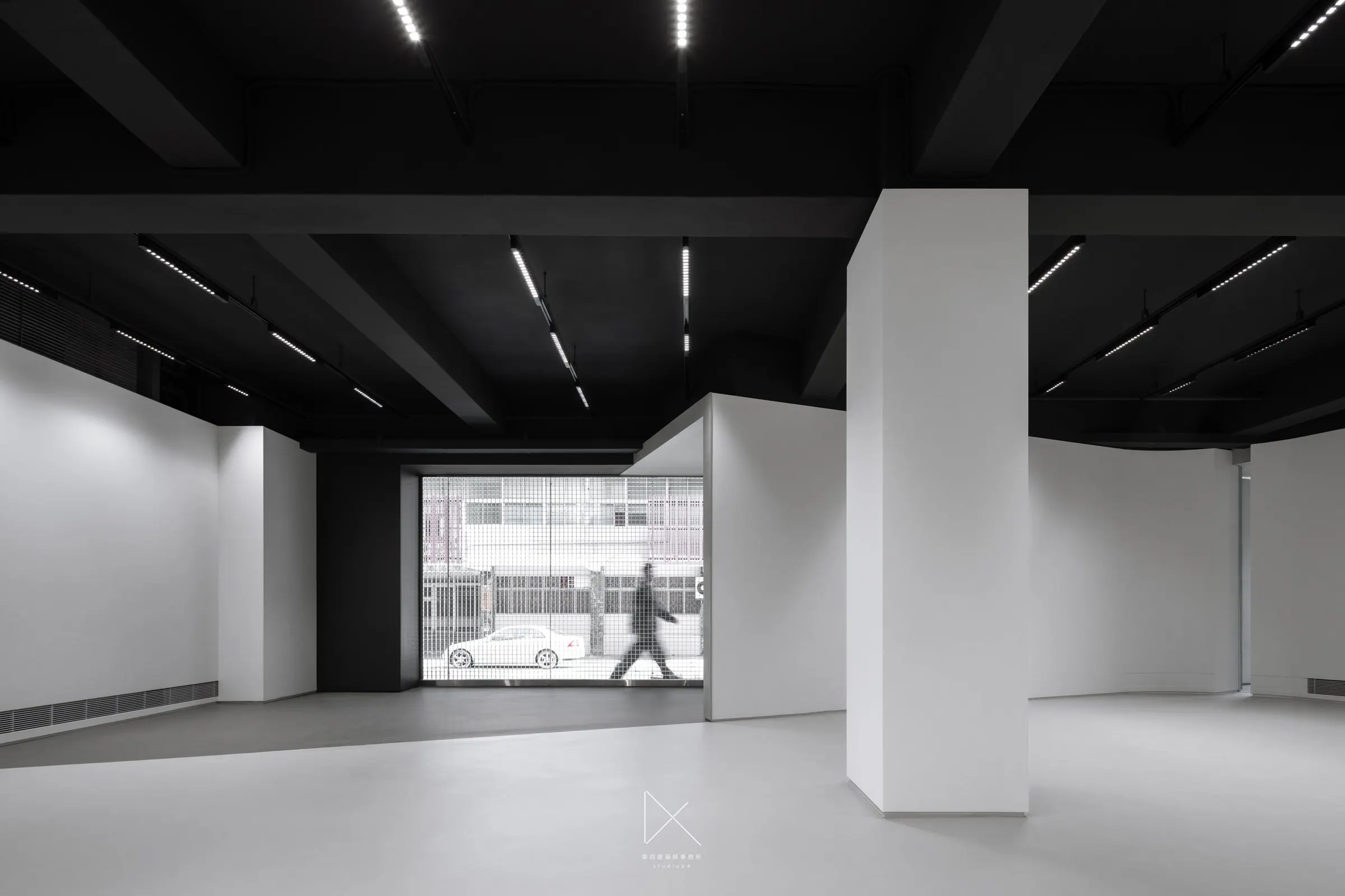
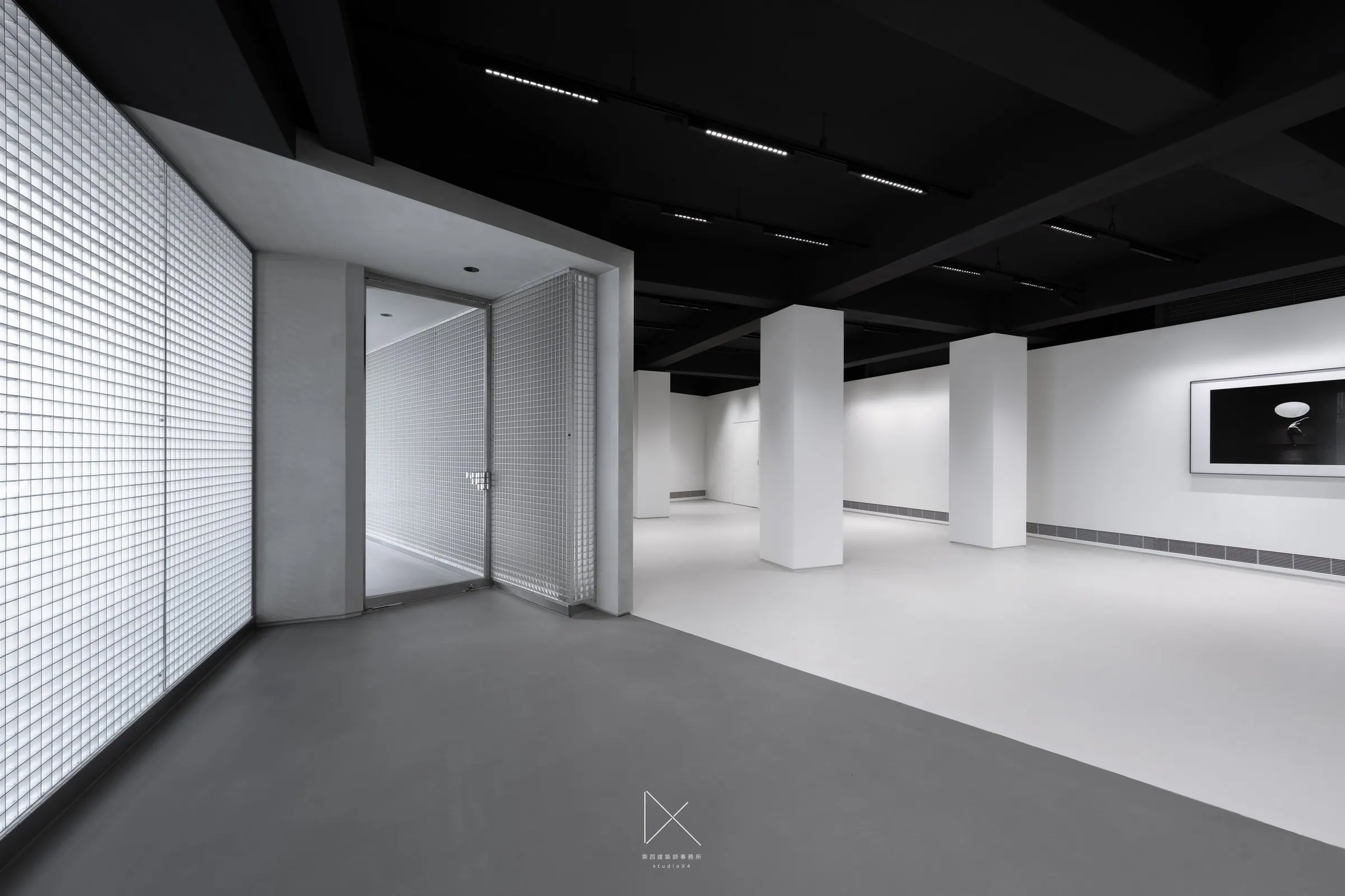
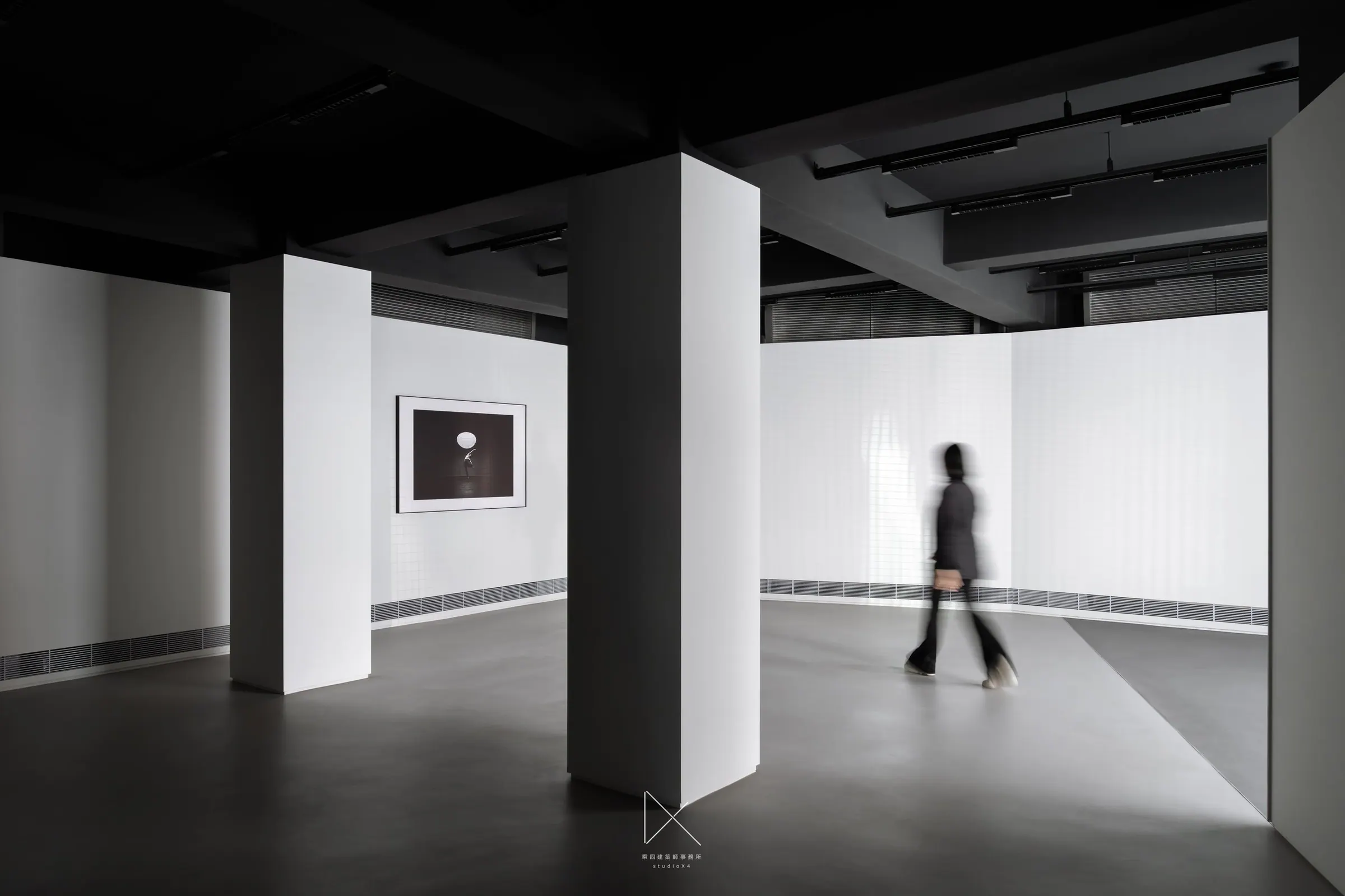
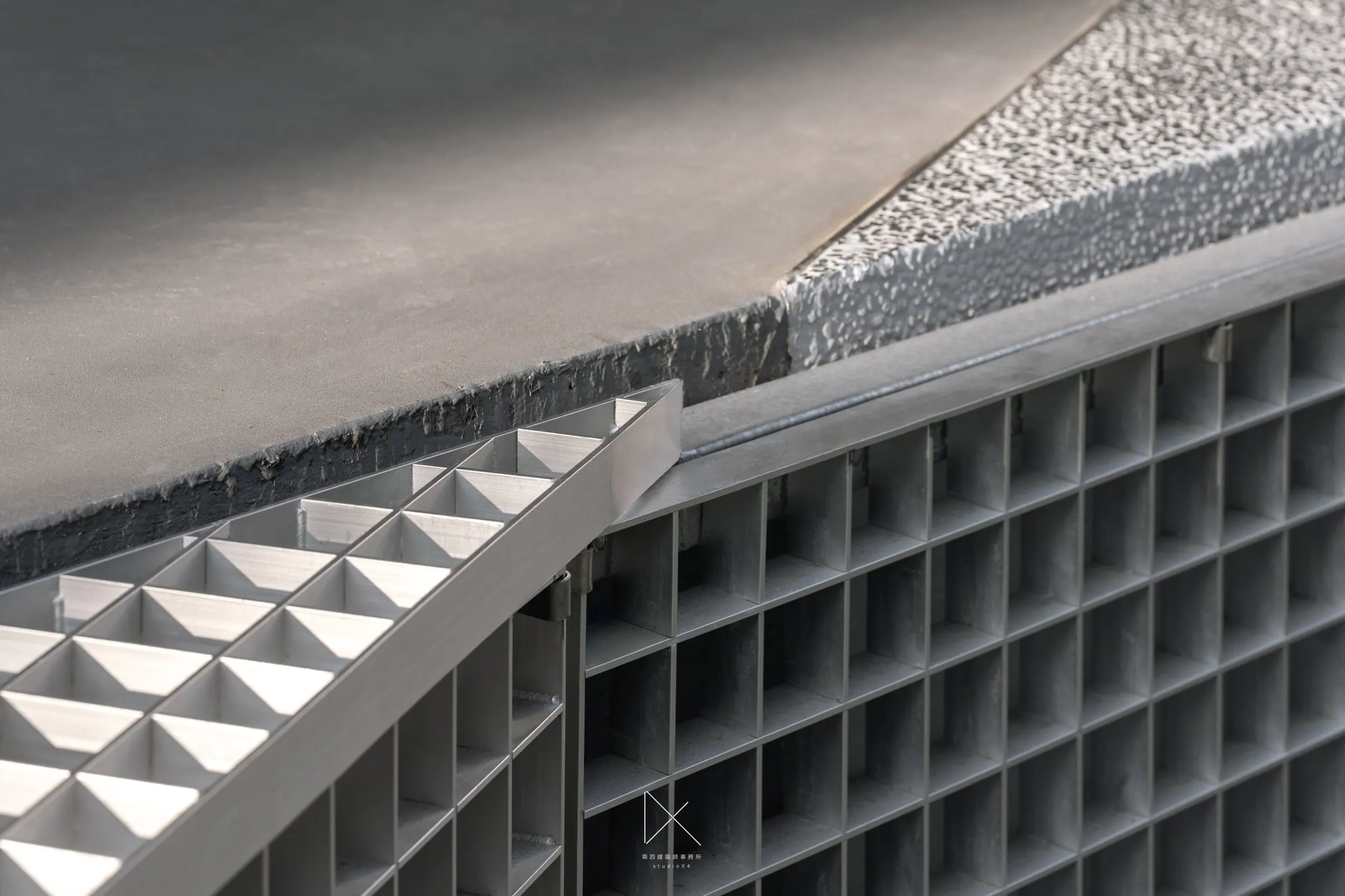
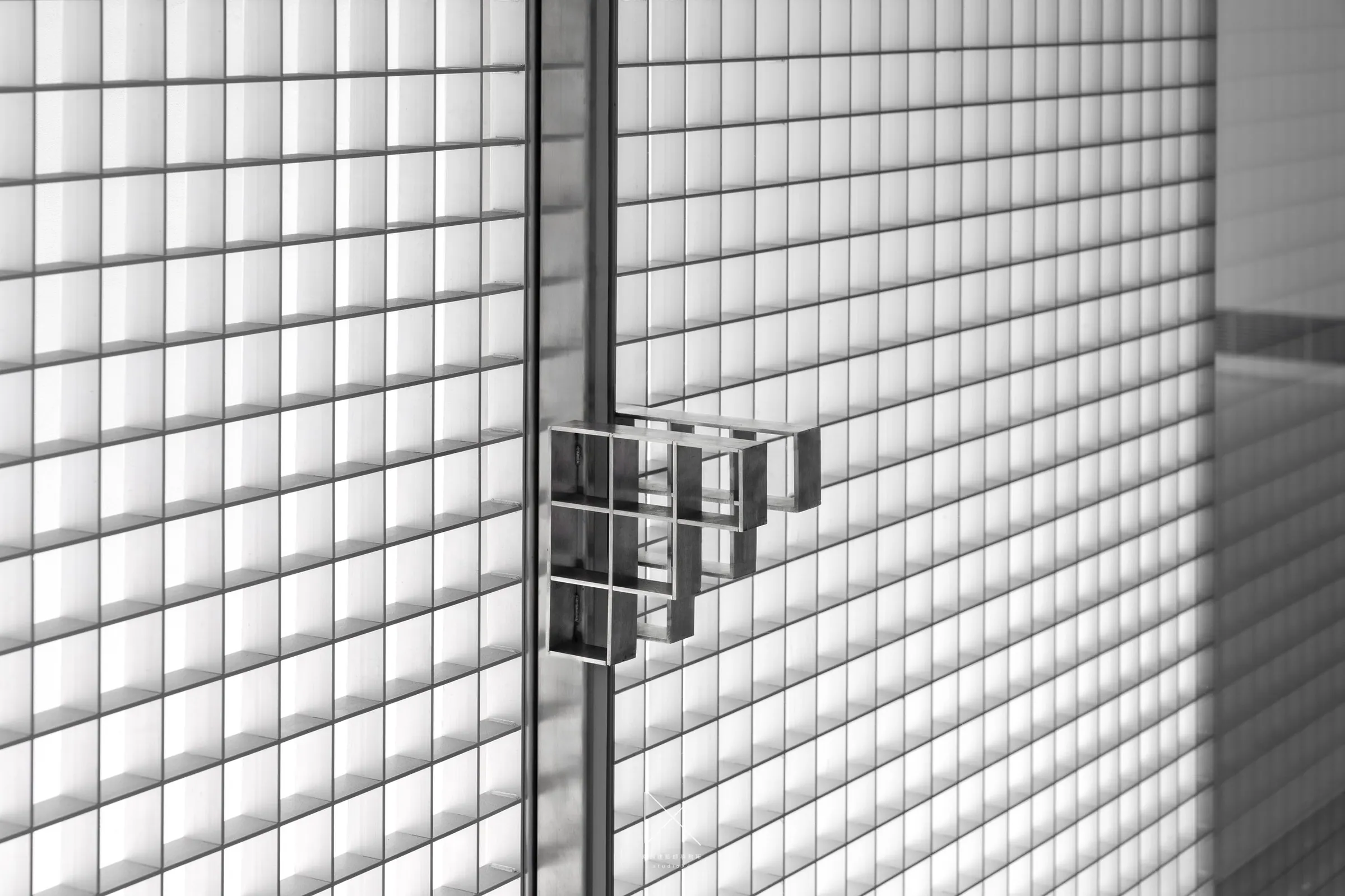
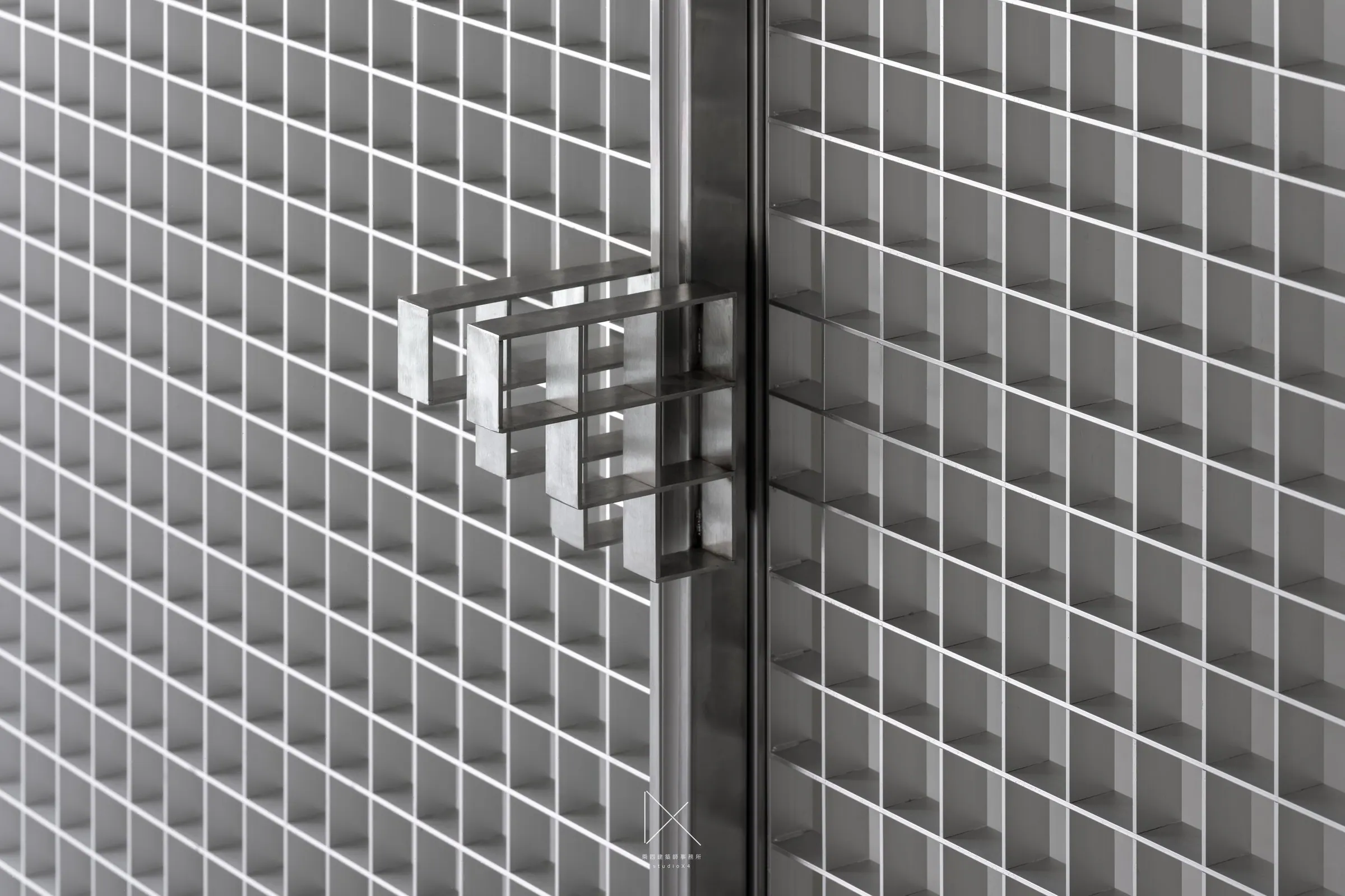
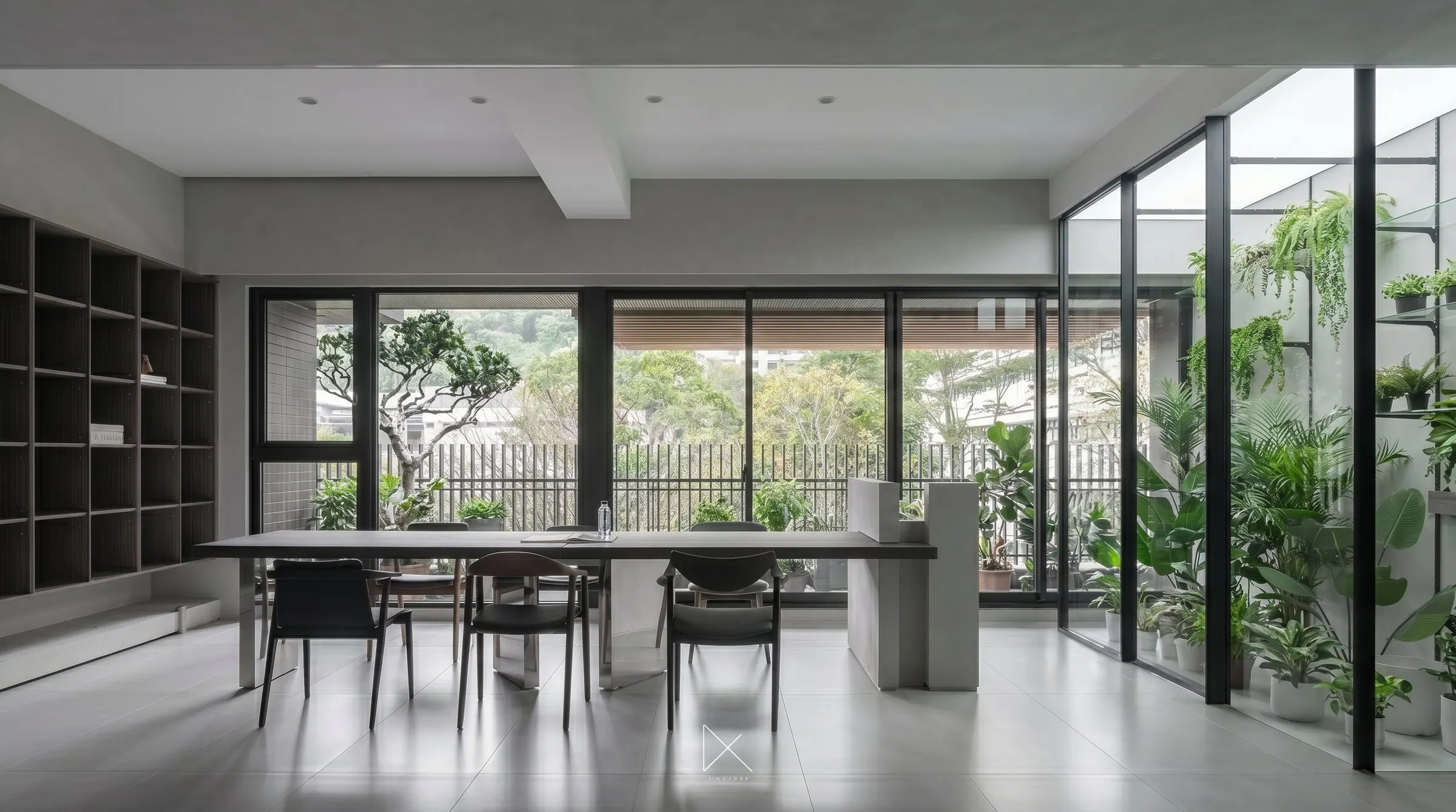
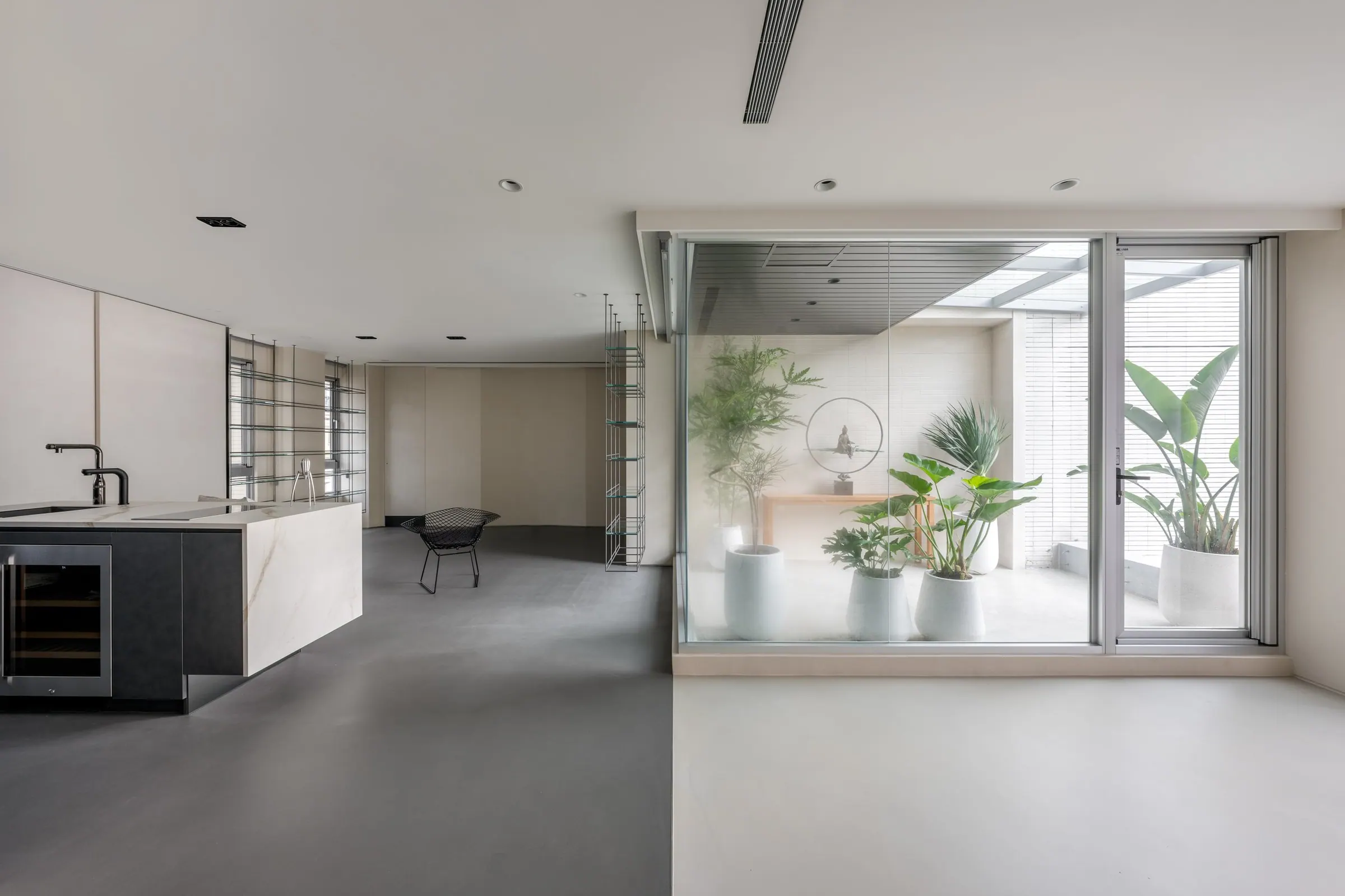
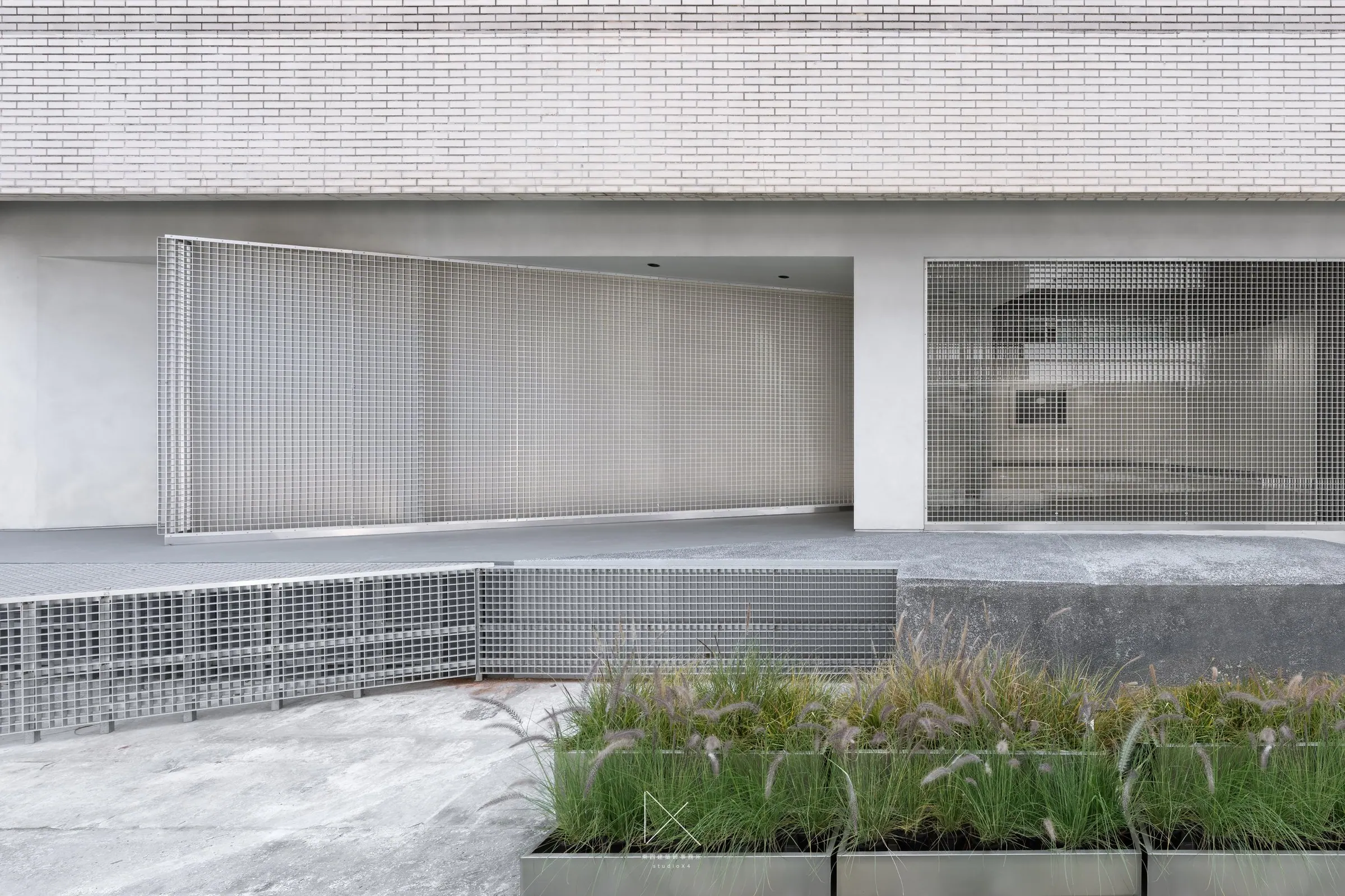
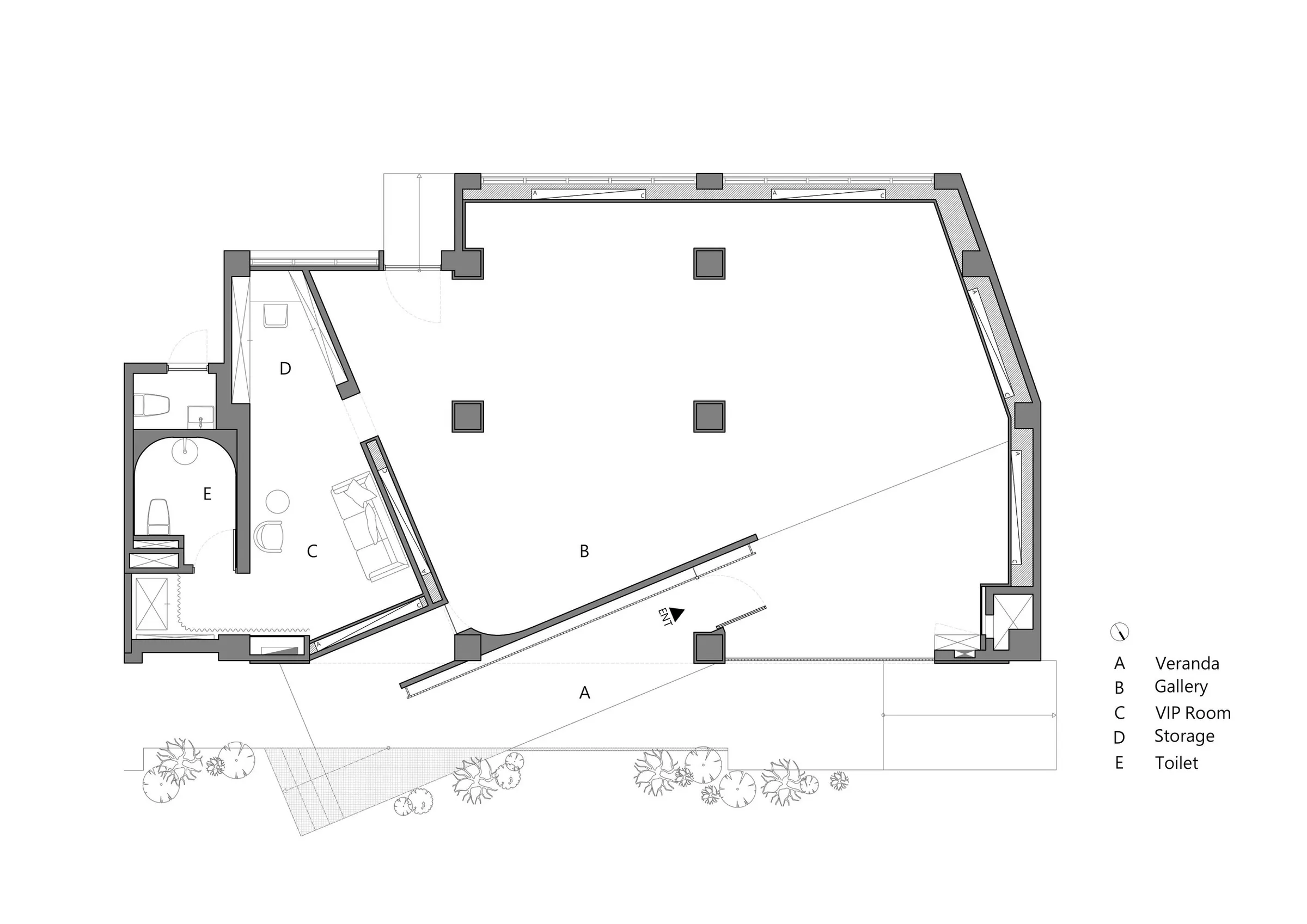
這棟由六〇年代台電搶修中心改造而成的藝廊,我們保留它的骨架,轉換了它面對街道的語言。立面使用手工焊接鋁格柵、將入口軸線偏轉了21 度,讓人得以安靜地進入。把舞台讓給室內的藝術作品,而空間僅僅是一張畫布。
This former 1960s Taipower emergency repair center has been reimagined as an exhibition gallery. Preserving its architectural integrity, the intervention introduces a restrained material language that allows the space to recede — becoming a quiet canvas where art and architecture can coexist.
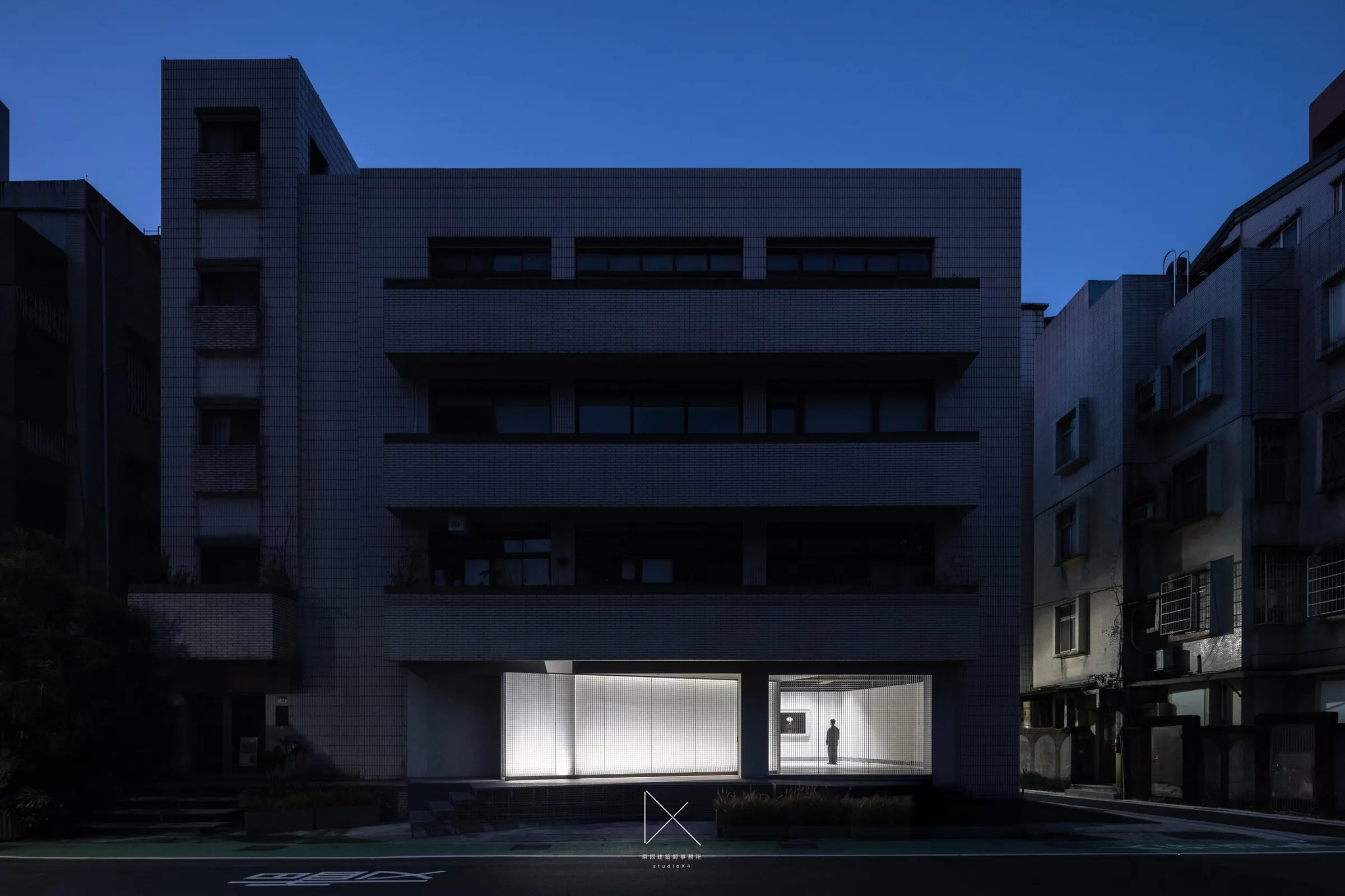
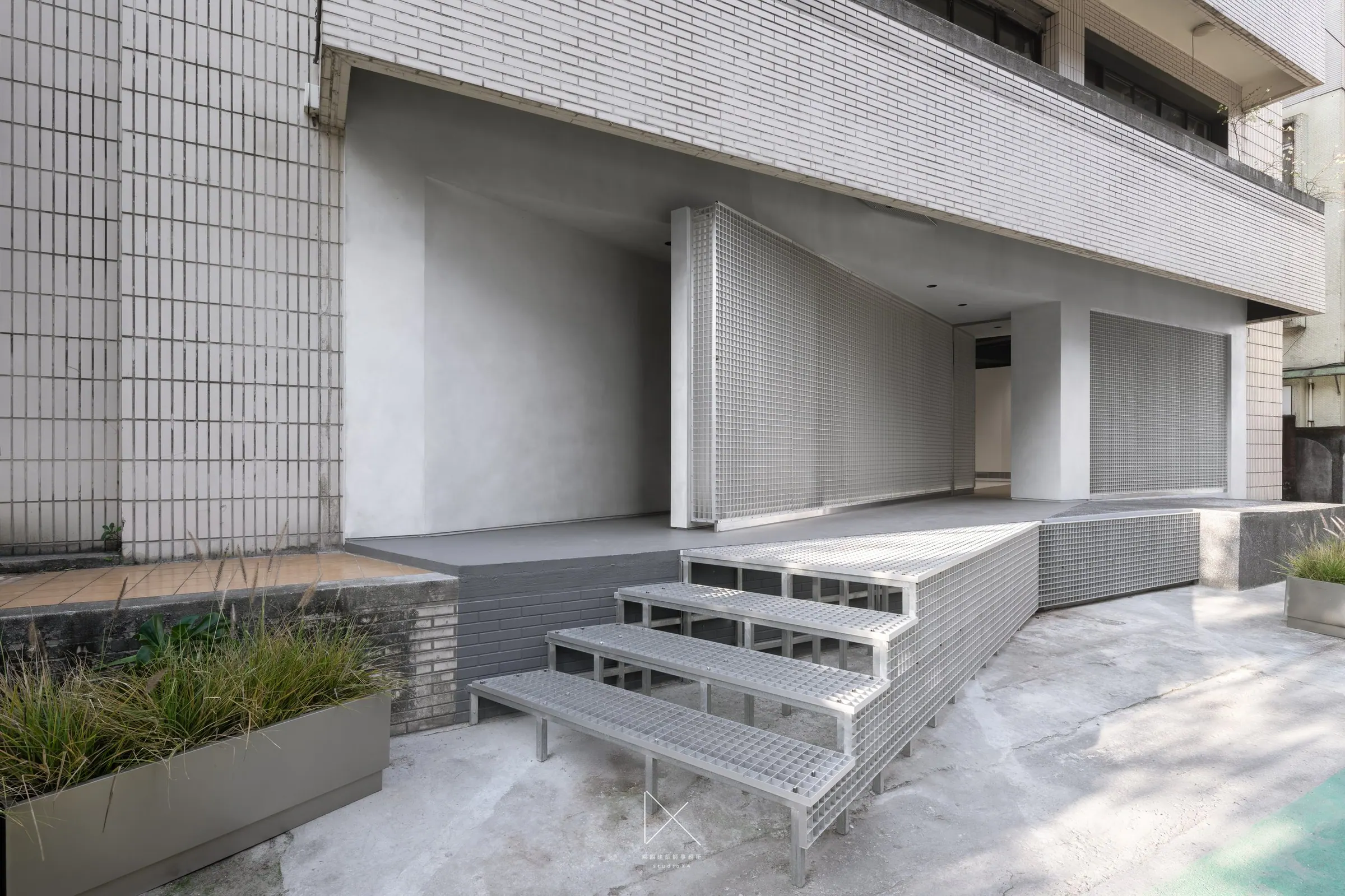
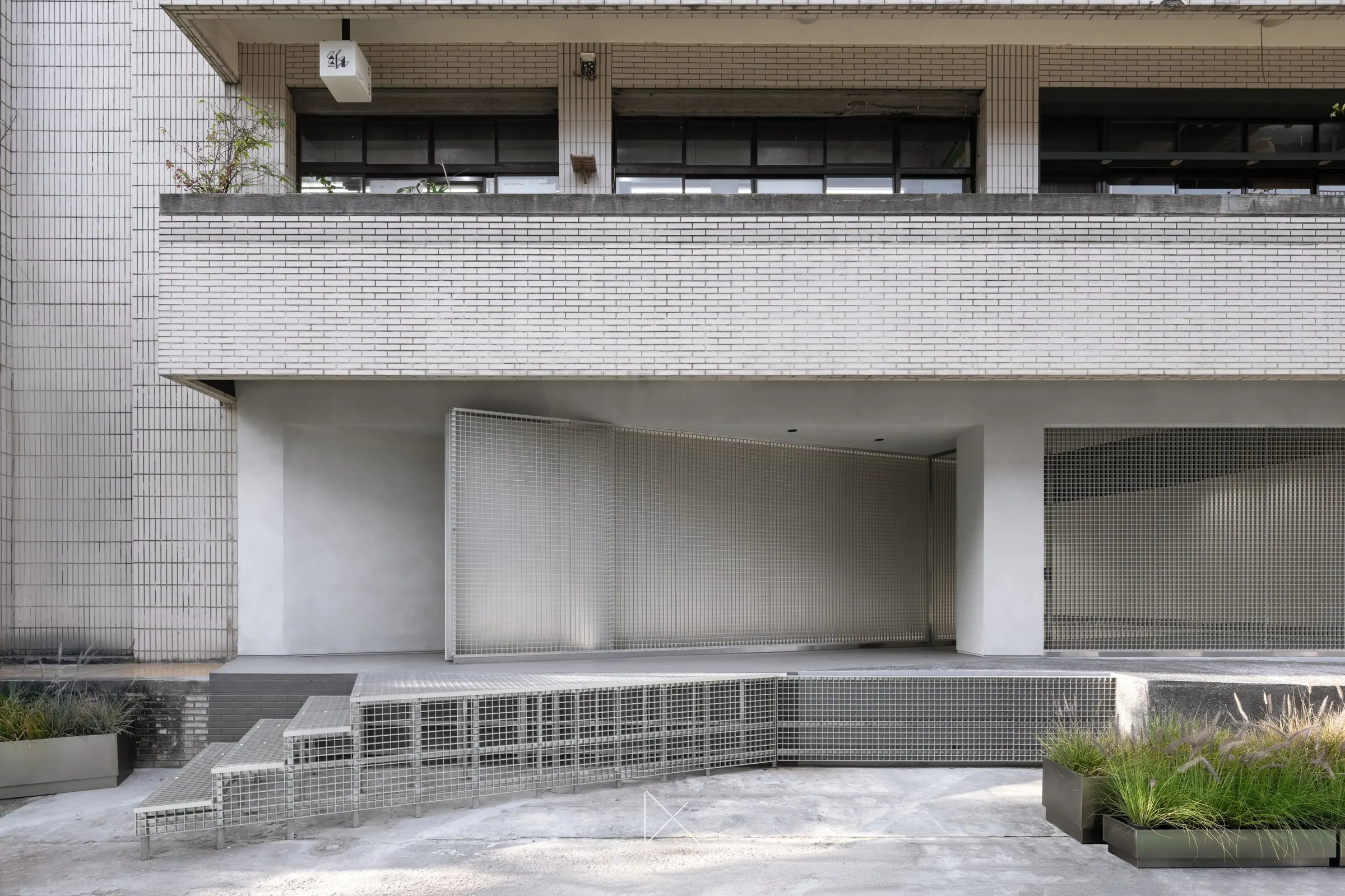
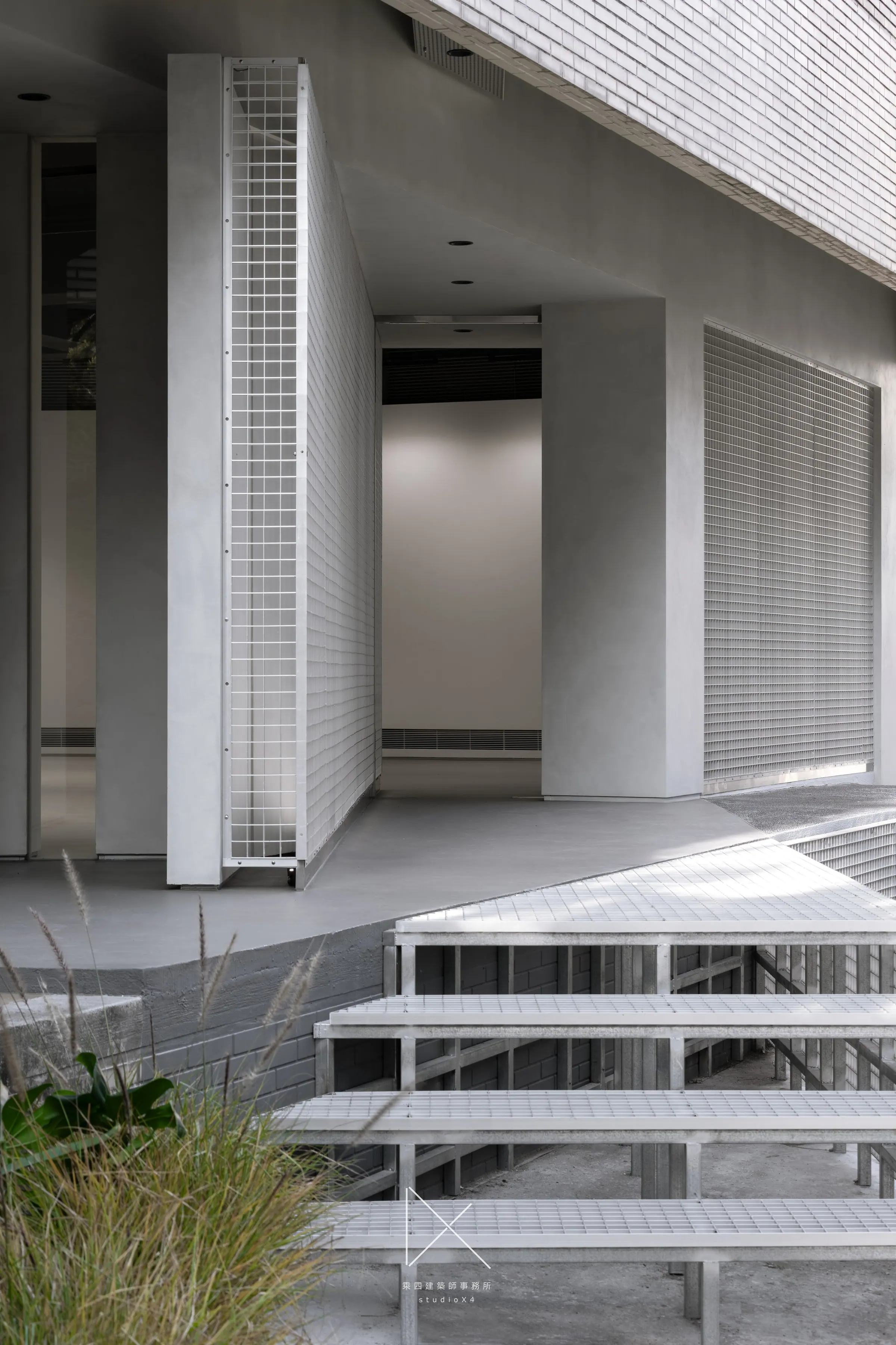
這棟六零年代遺留下來的房子,前身是台電的搶修中心 — 那個時代它是進步的象徵:貨櫃車專用的抬高地板、鋼筋混凝土構造、表面仿造磚造時期尺寸的二丁掛。我們保留它的骨,換了它的語言。
The original structure is a 1960s Taipower emergency-repair center — once a local symbol of progress: raised floors designed for container trucks, a reinforced-concrete skeleton, and a Japanese “two-Ding” tile facade echoing the masonry proportions of an earlier era. We kept its bones. We changed its language.
展覽空間之於藝術家,如同畫布之於顏料 — 它應該是背景,是包容的語彙。於是我們找尋中性的材料:不屬於男性的,也不屬於女性的,不搶眼,也不隱藏。我們選擇反射性較低的鋁料,焊接成最原始的方格狀。
For an artist, the exhibition space is what the canvas is to paint — a background that enables expression. The aluminum intervention was chosen for its low reflectivity, forming an elemental grid that supports rather than competes with the artwork.
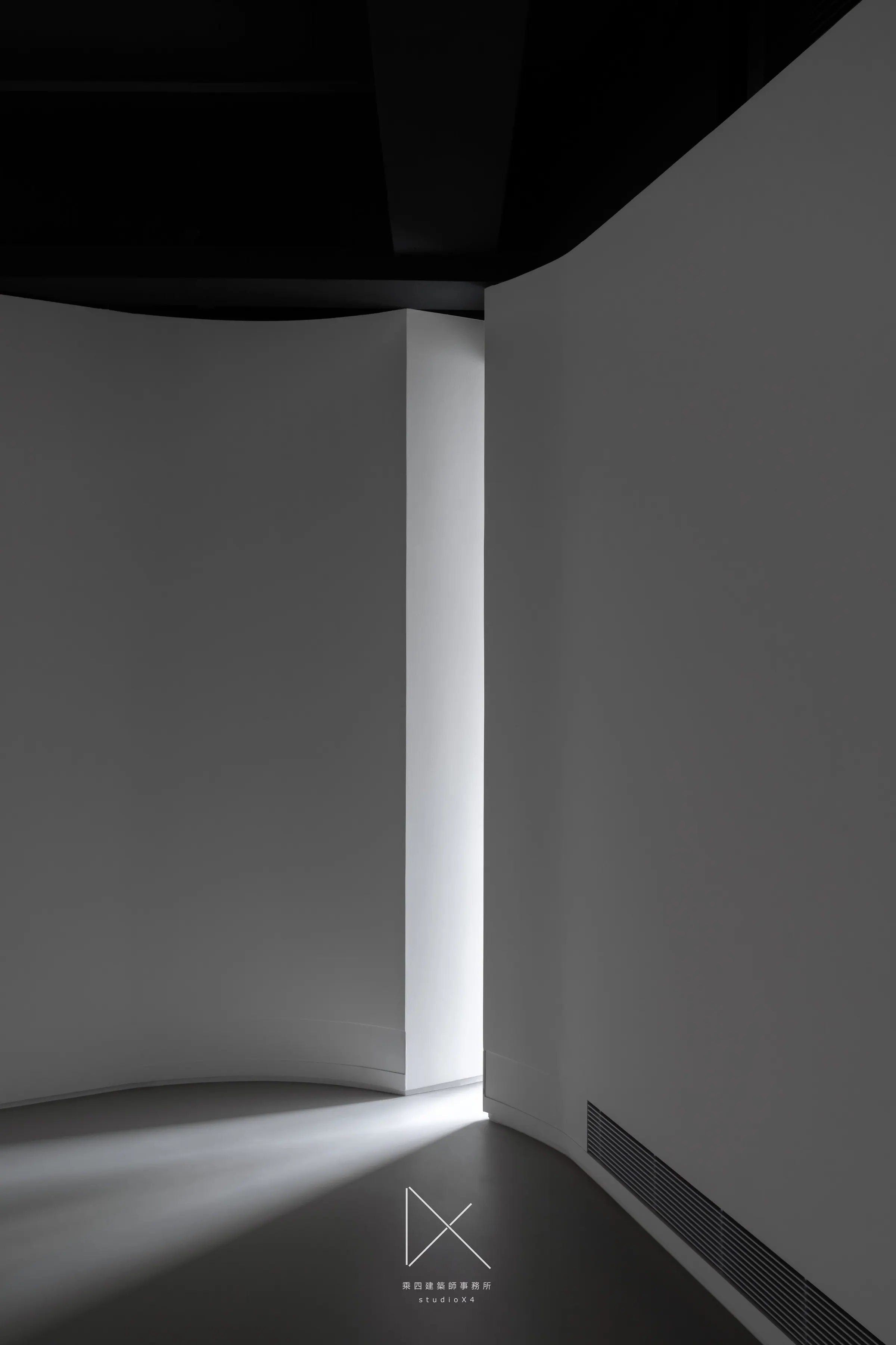
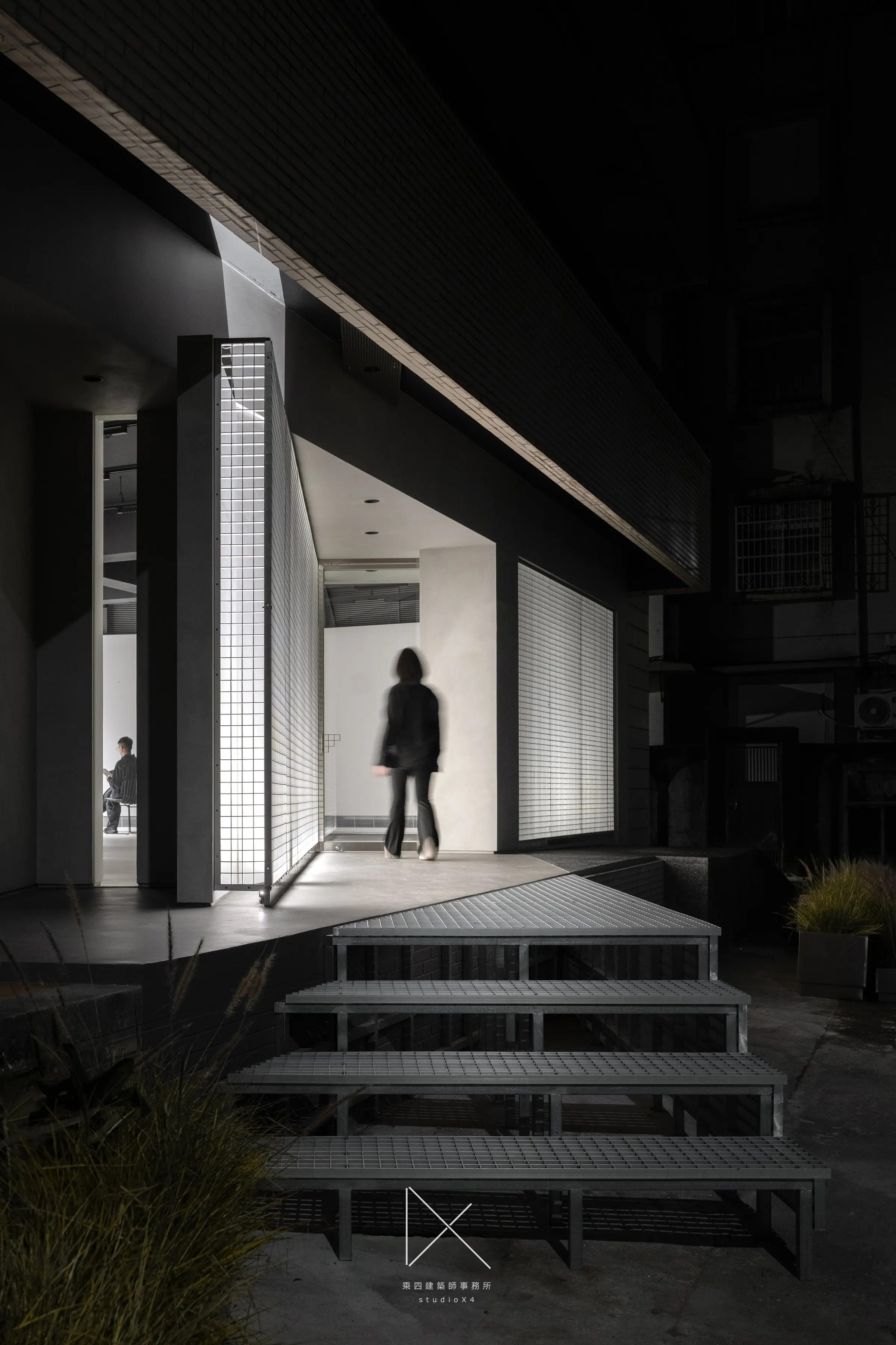
入口 — 就是那道微微轉折 21 度的軸線。
At the entrance, a subtle 21-degree axial pivot creates a shift in movement and perception.
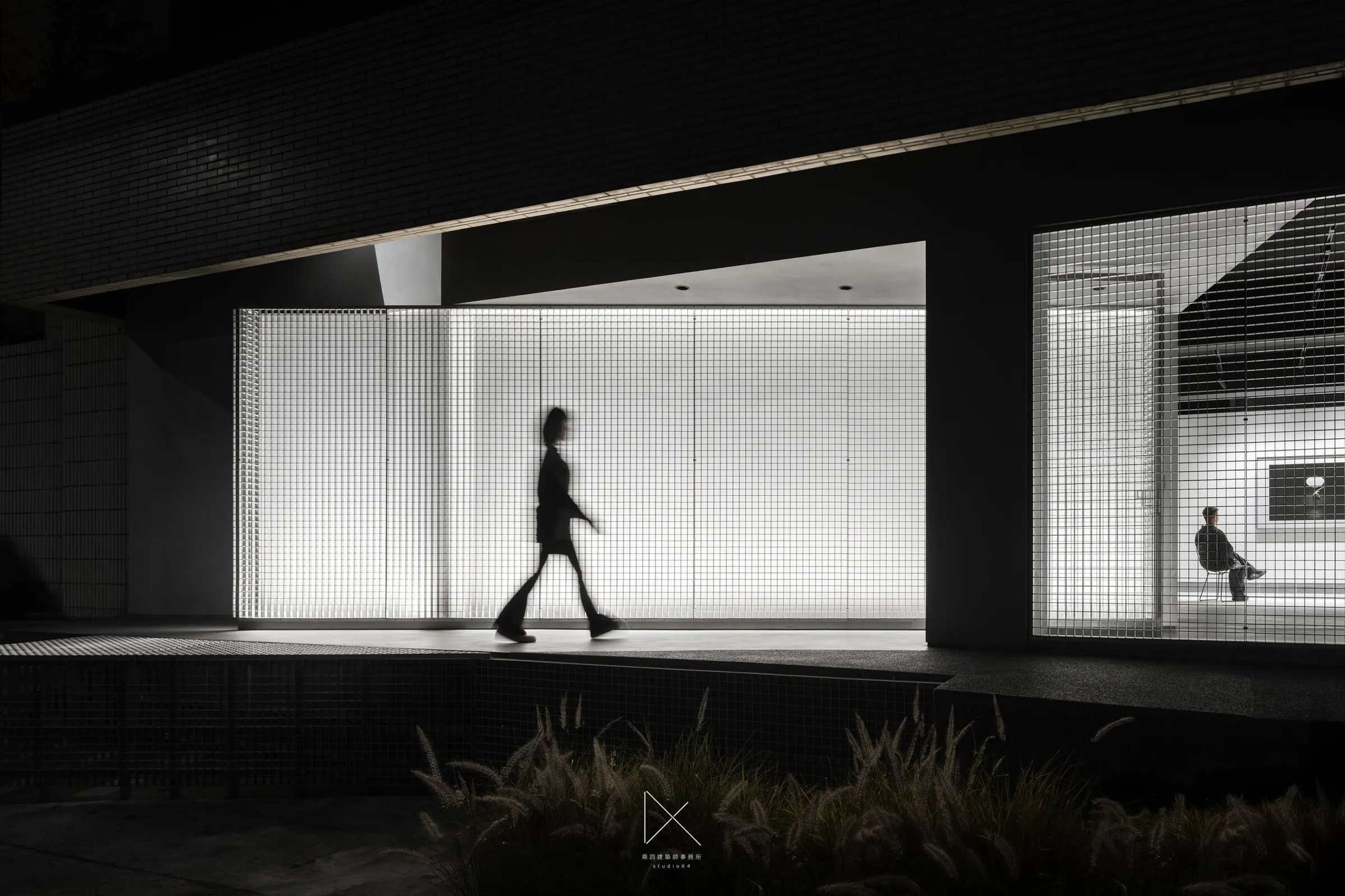
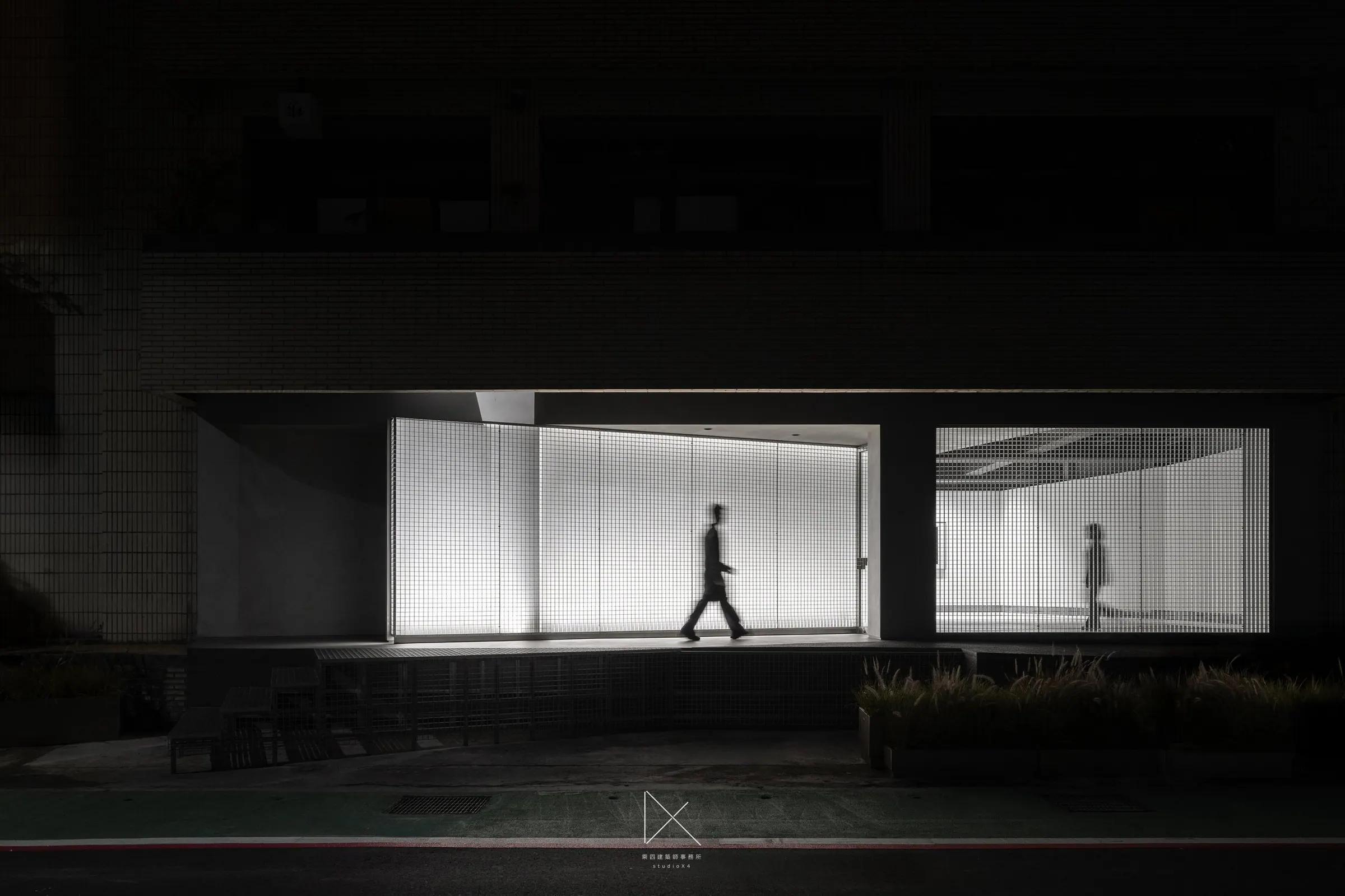
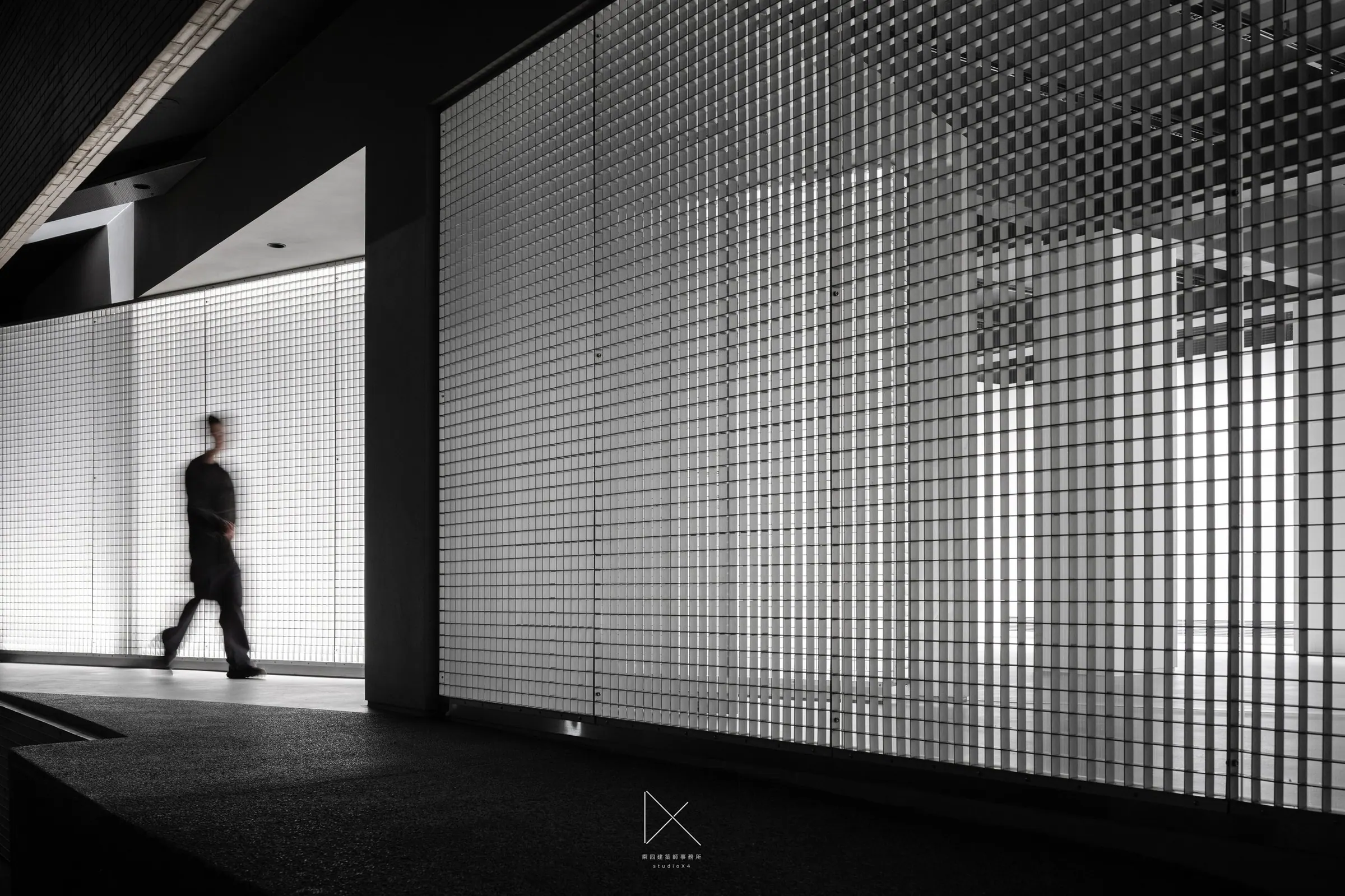
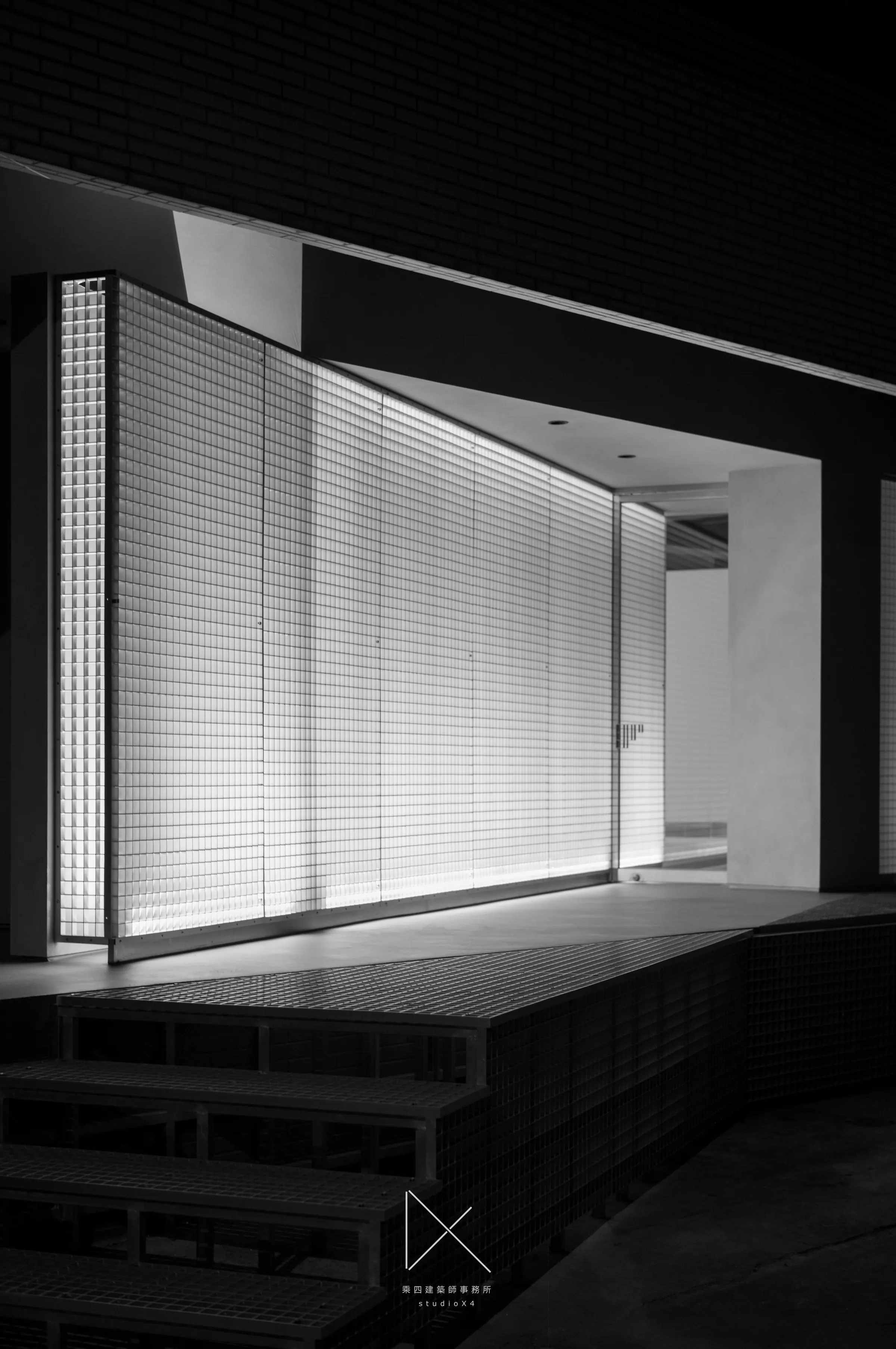
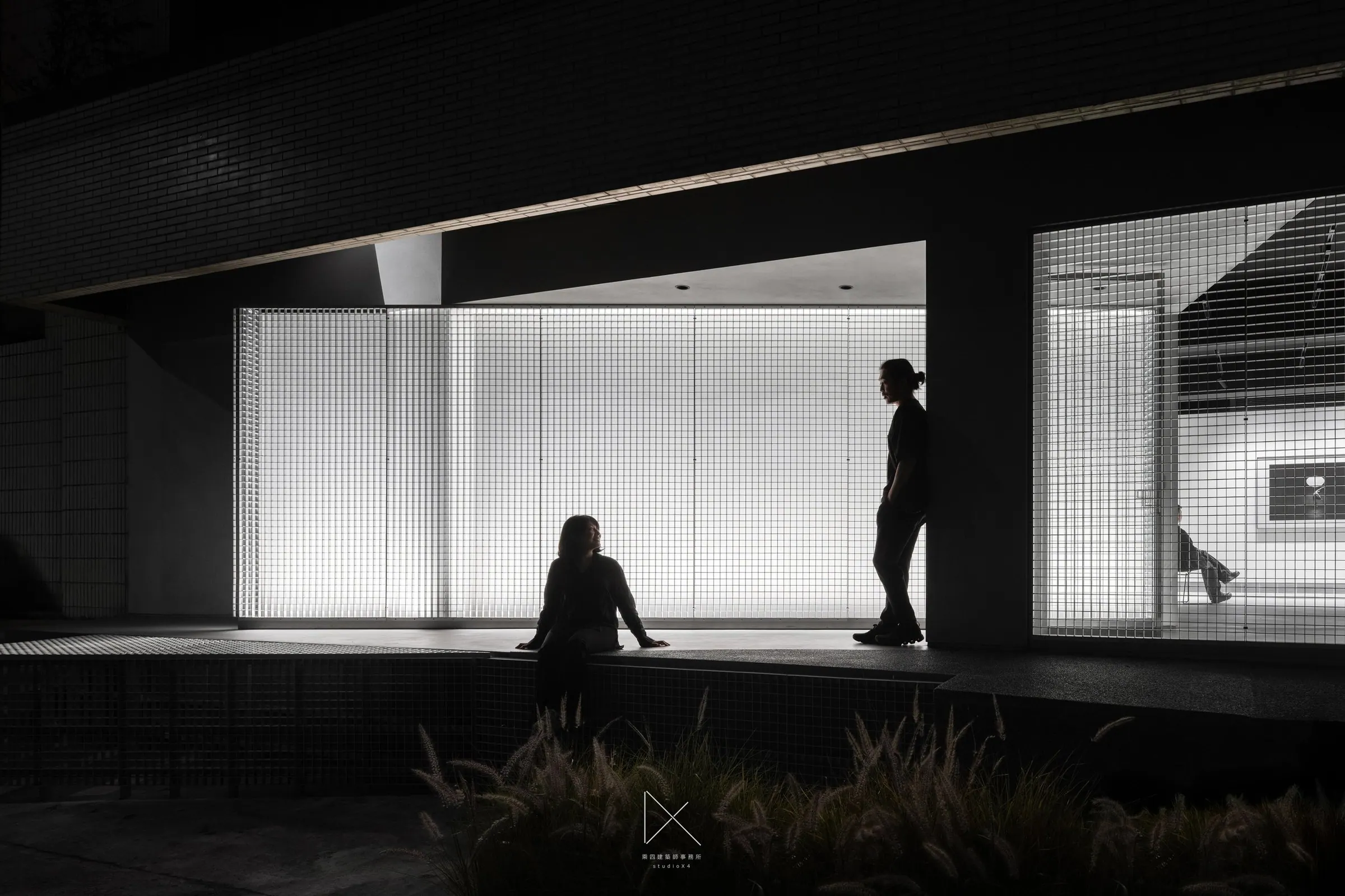
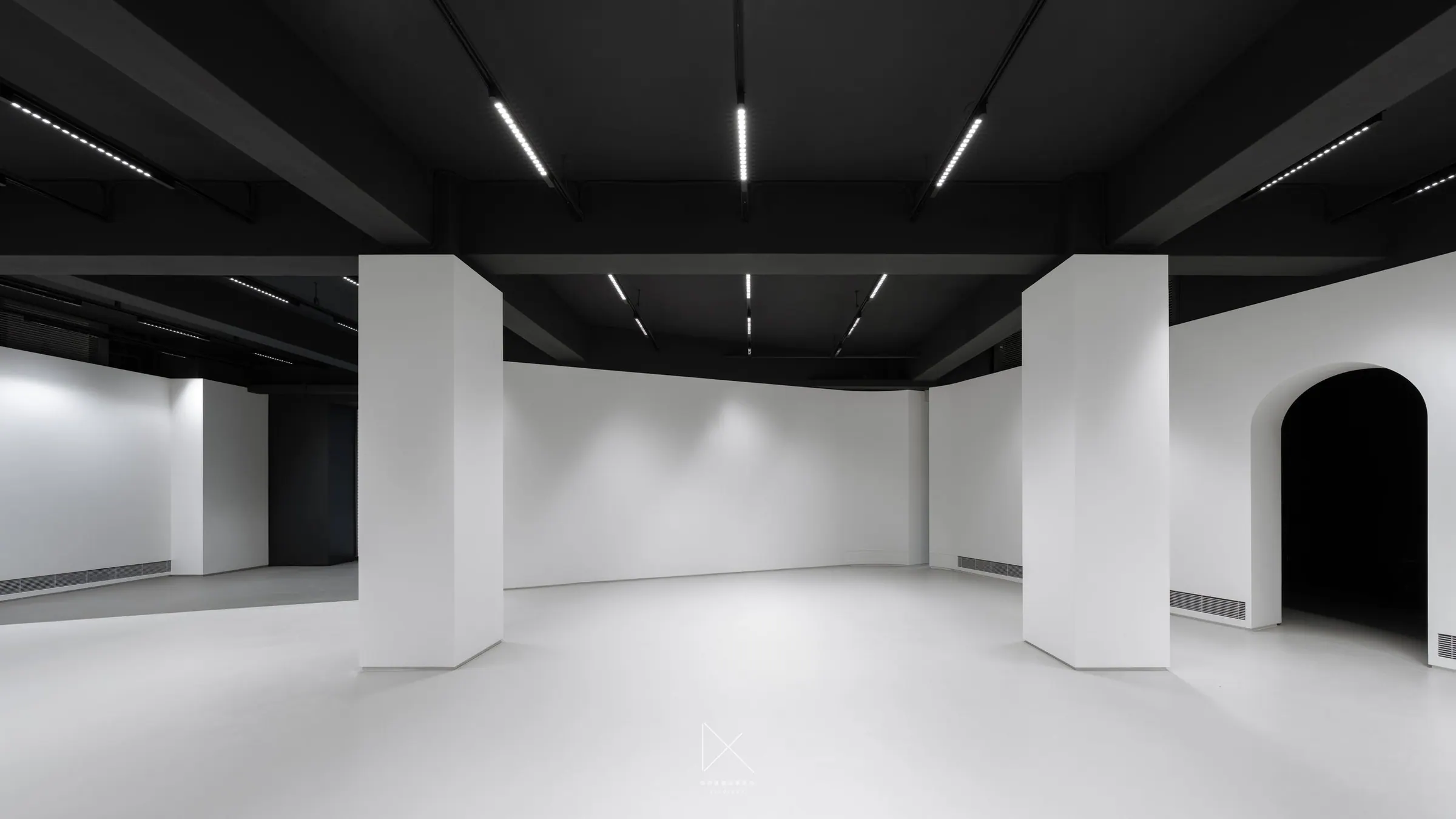
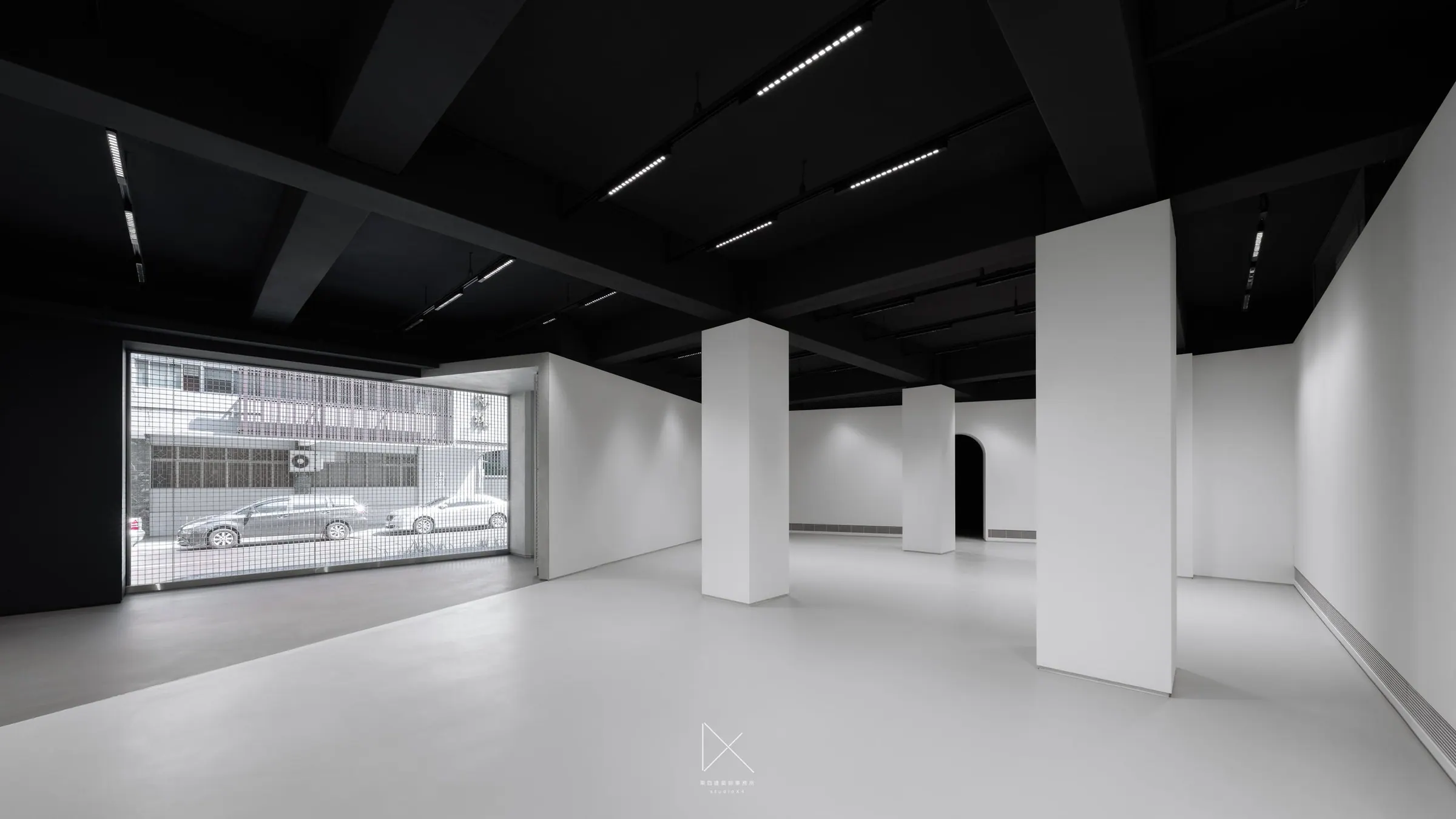
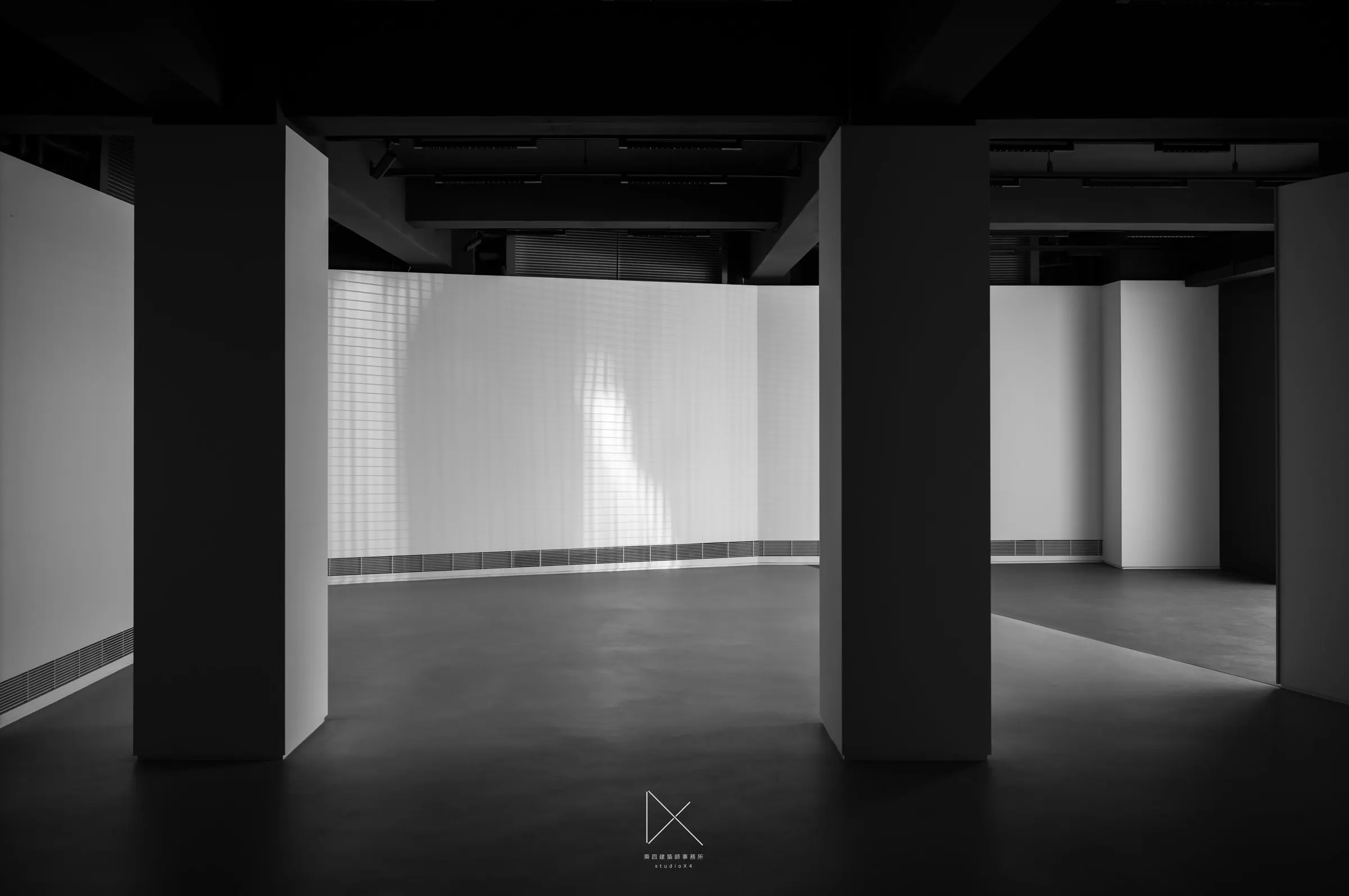
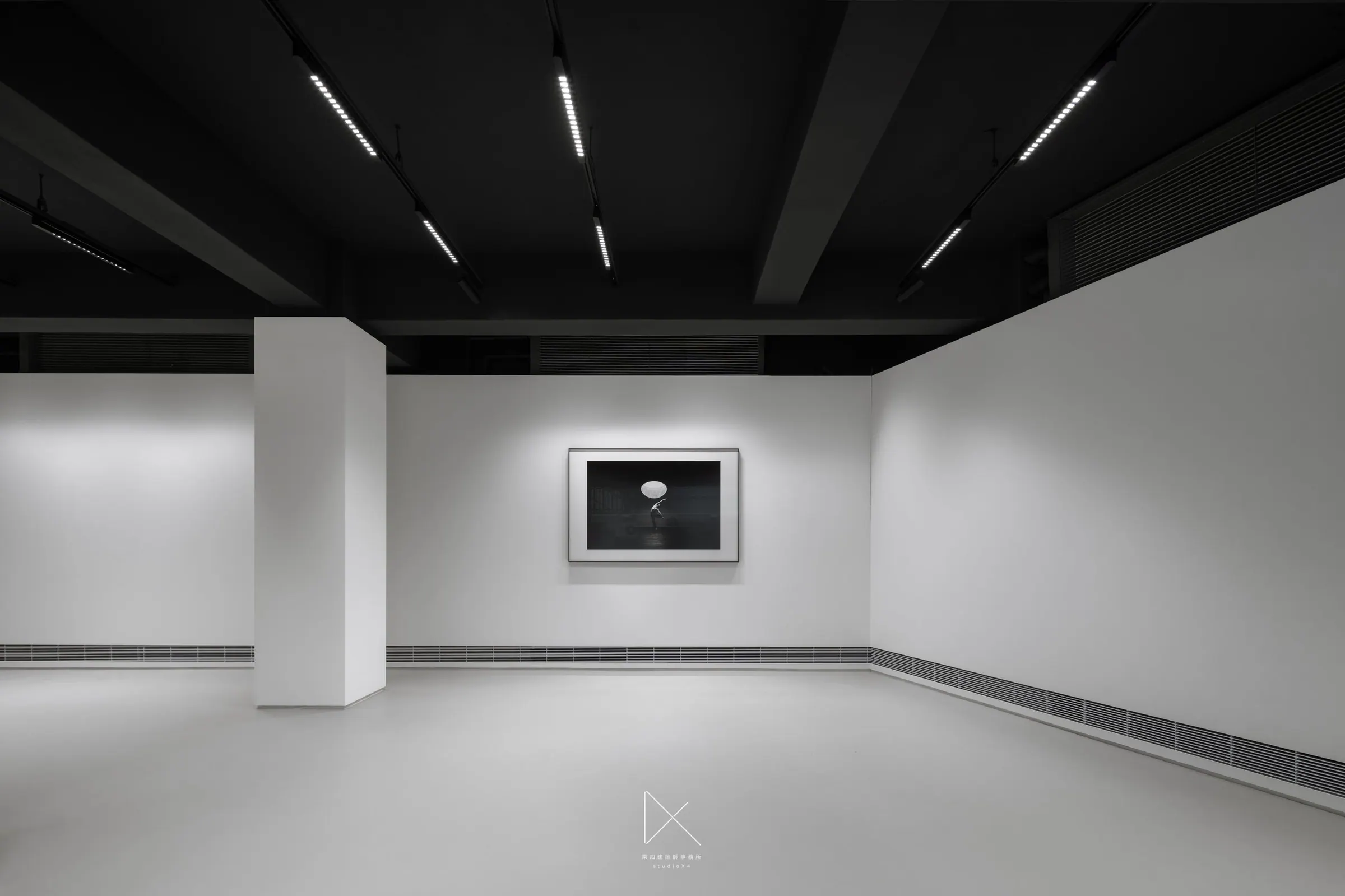
如果這件藝術品是歡愉的,那空間也該歡愉;如果它是羞赧的,那空間也該羞赧。白牆、白地、黑頂,方柱排列,鋁格光幕游移於後牆——我們把語彙降到最低,讓作品說話。
If the work is exuberant, the space must allow it to feel exuberant; if the artwork is restrained, the space must know when to remain quiet. White walls, a white floor, a dark ceiling, and a rhythm of columns establish a neutral framework, while the grid’s shifting light traces the rear wall. We lowered our own voice so the work could speak.
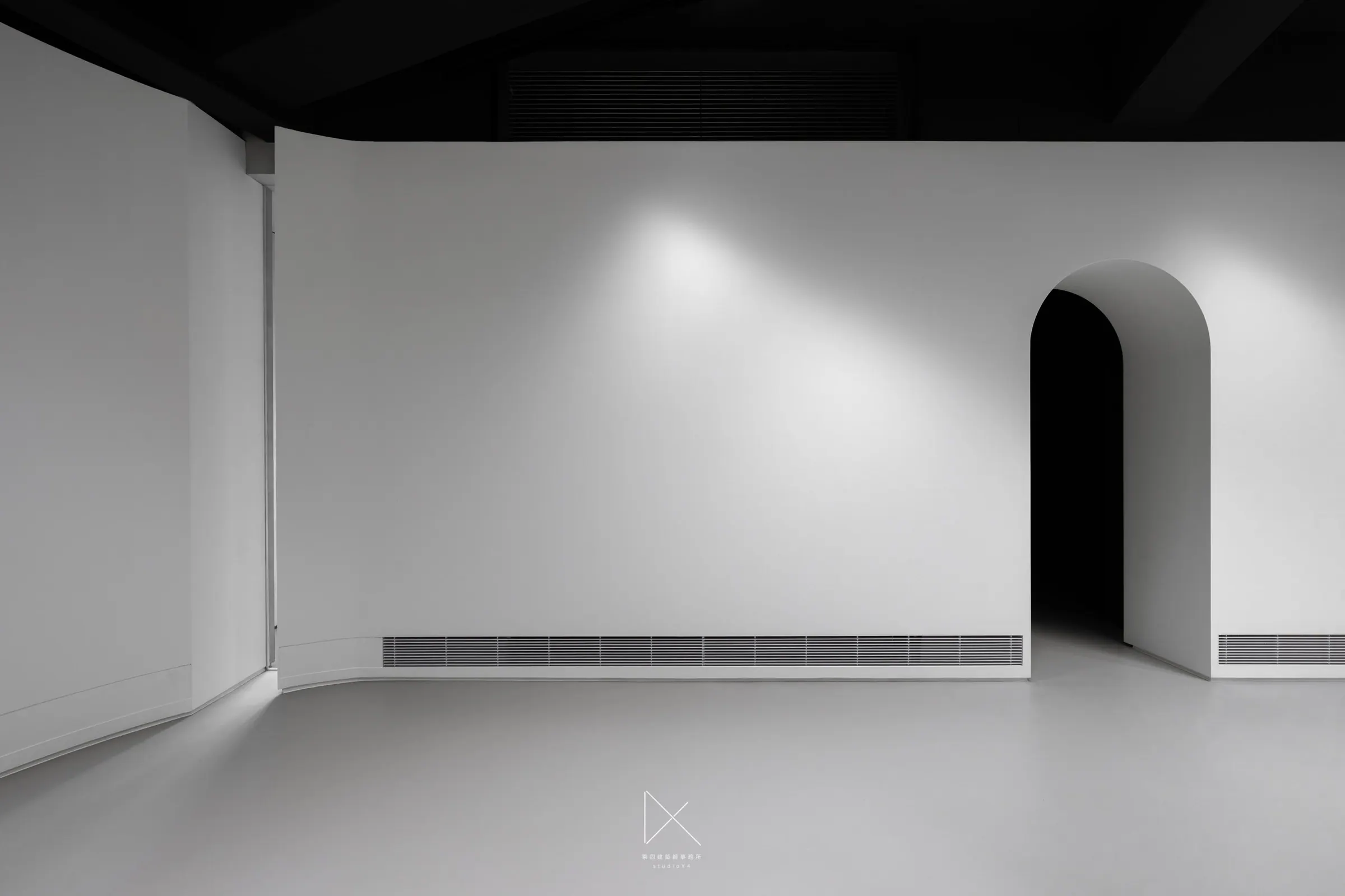
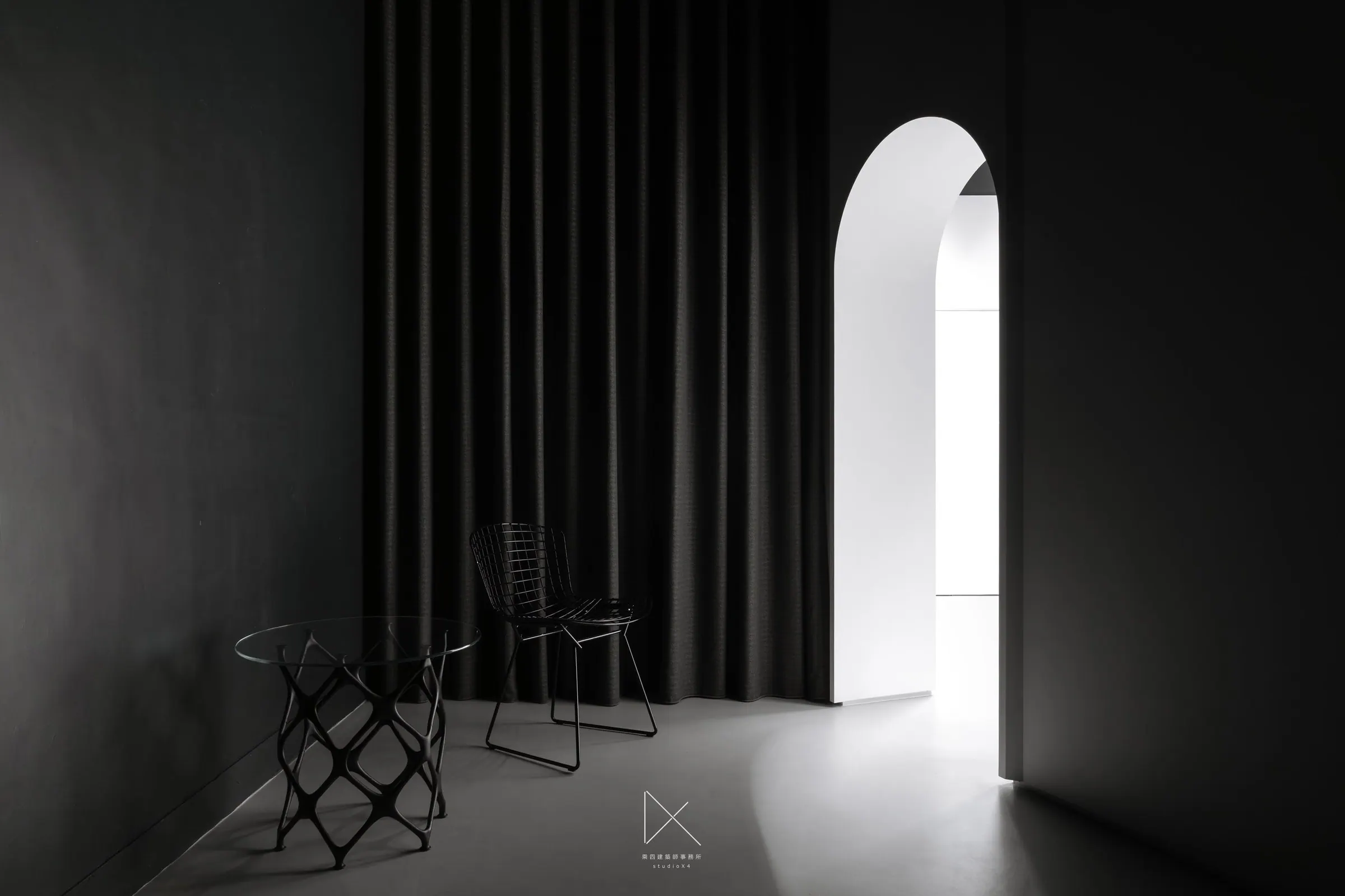
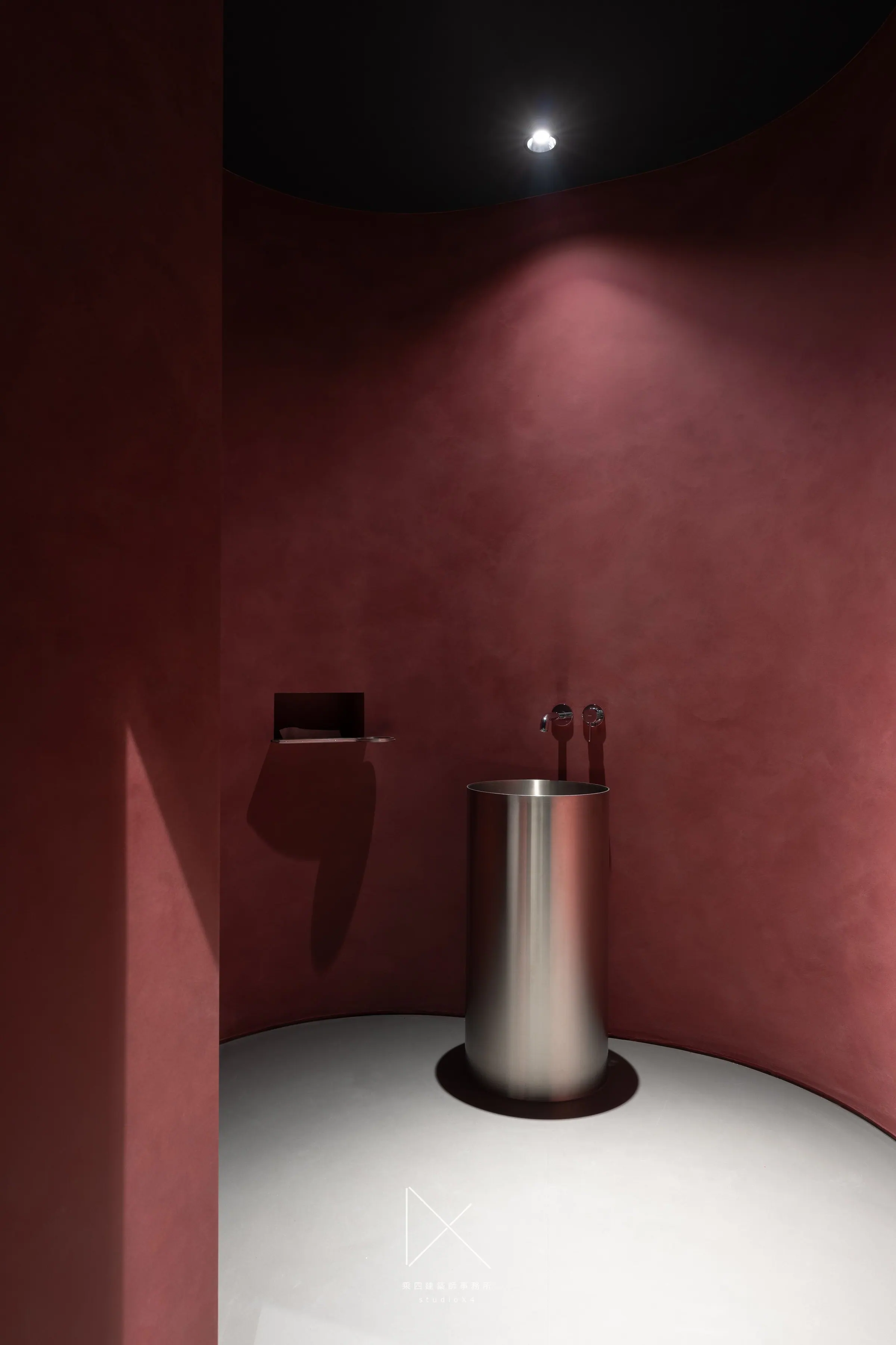
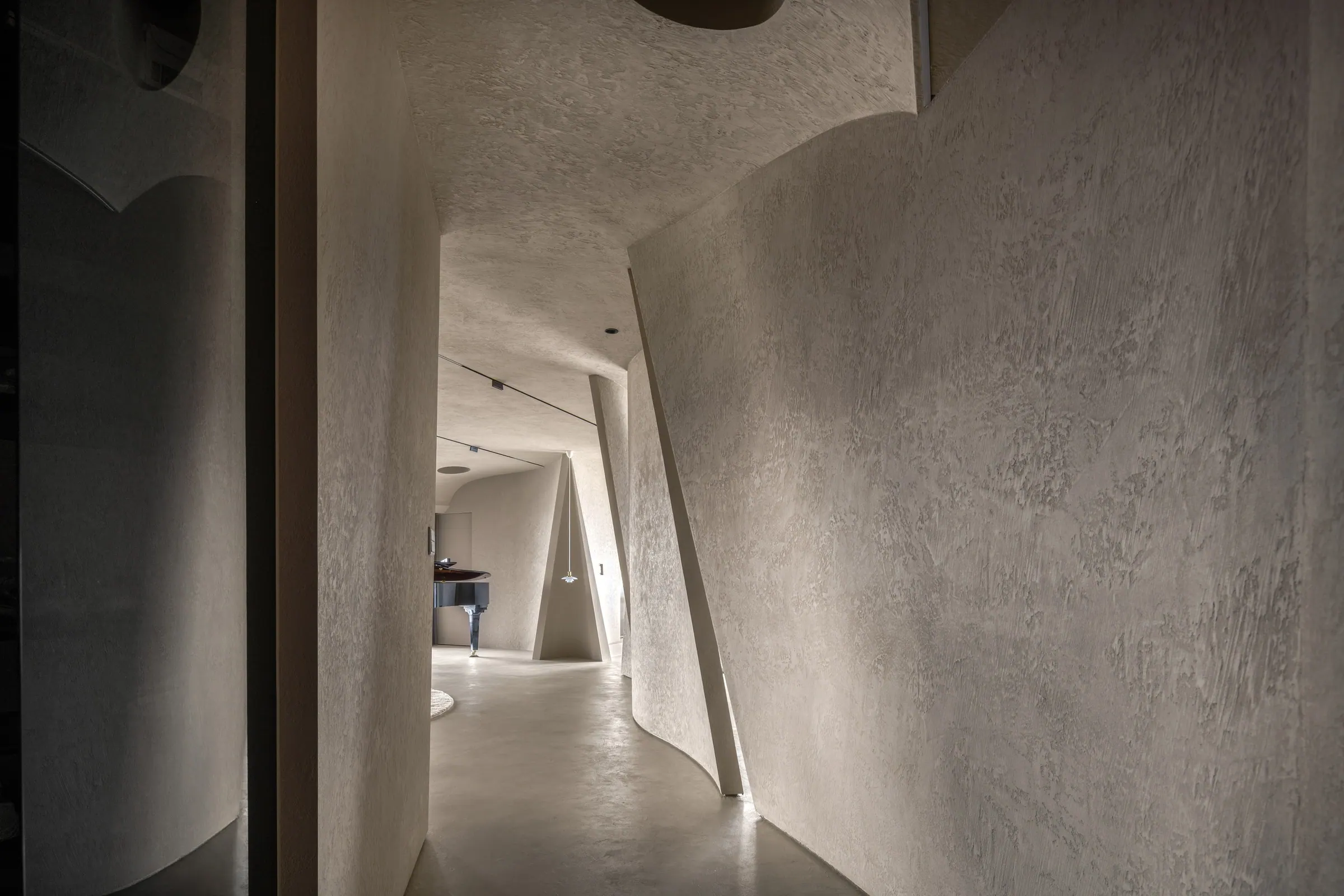
極簡不是空無。曲牆盡頭有拱門,拱門後有暗室,暗室深處有一抹紅
Minimalism is not emptiness. It is the creation of space for attention. A curved wall leads visitors toward an arch; beyond it lies a darkened room, and within that darkness, a single red element emerges.