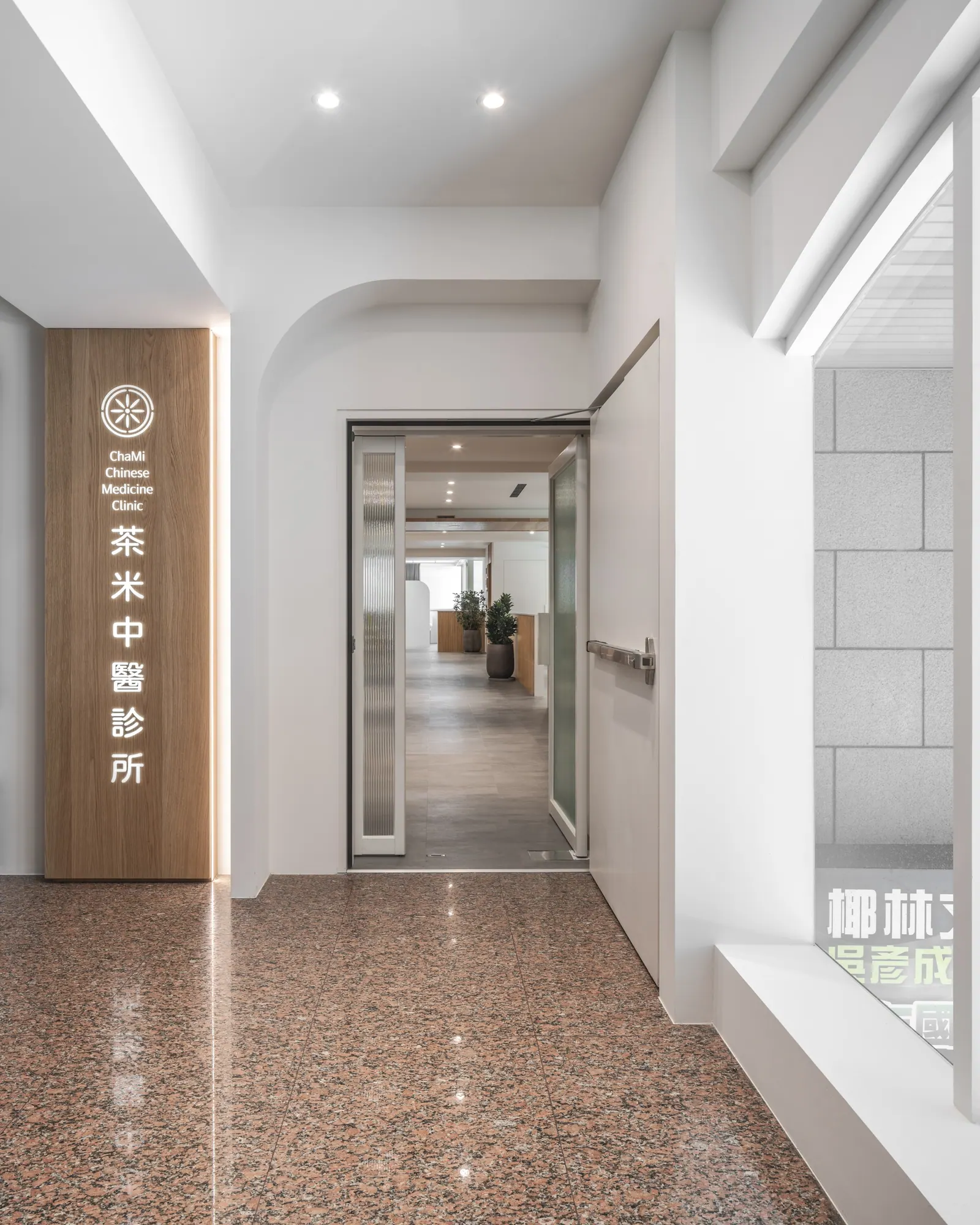
茶米中醫位於台北市松山區,為一成熟發展之區域,北面緊鄰傳統市集,南面為台北市重點金融區域。有別於一般健保院所將院址設為一樓,此院所將位置設於三樓,以保障病人之隱私。室內面積為150坪/495米平方,包含診療中心、調劑處所、專屬治療室以及私人實驗室。
Cha Mi Chinese Medicine is located in Songshan District, Taipei — a well-established area bordered by a traditional market to the north and Taipei's core financial district to the south. Unlike typical NHI clinics that place their entrance on the ground floor, this clinic sits on the third floor to protect patient privacy. The interior spans 495 m² / 150 ping and includes a consultation center, a dispensary, dedicated treatment rooms, and a private laboratory.
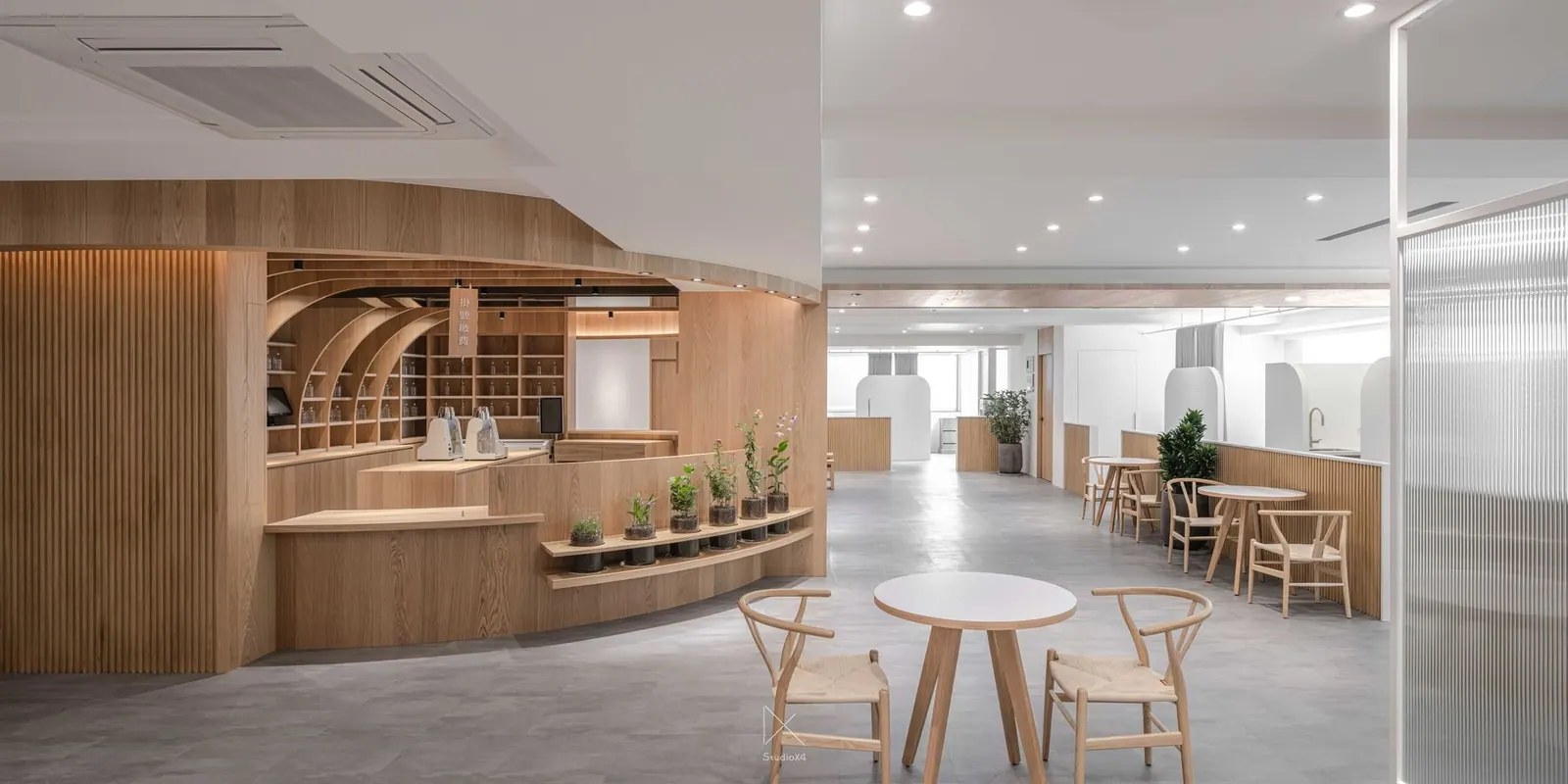
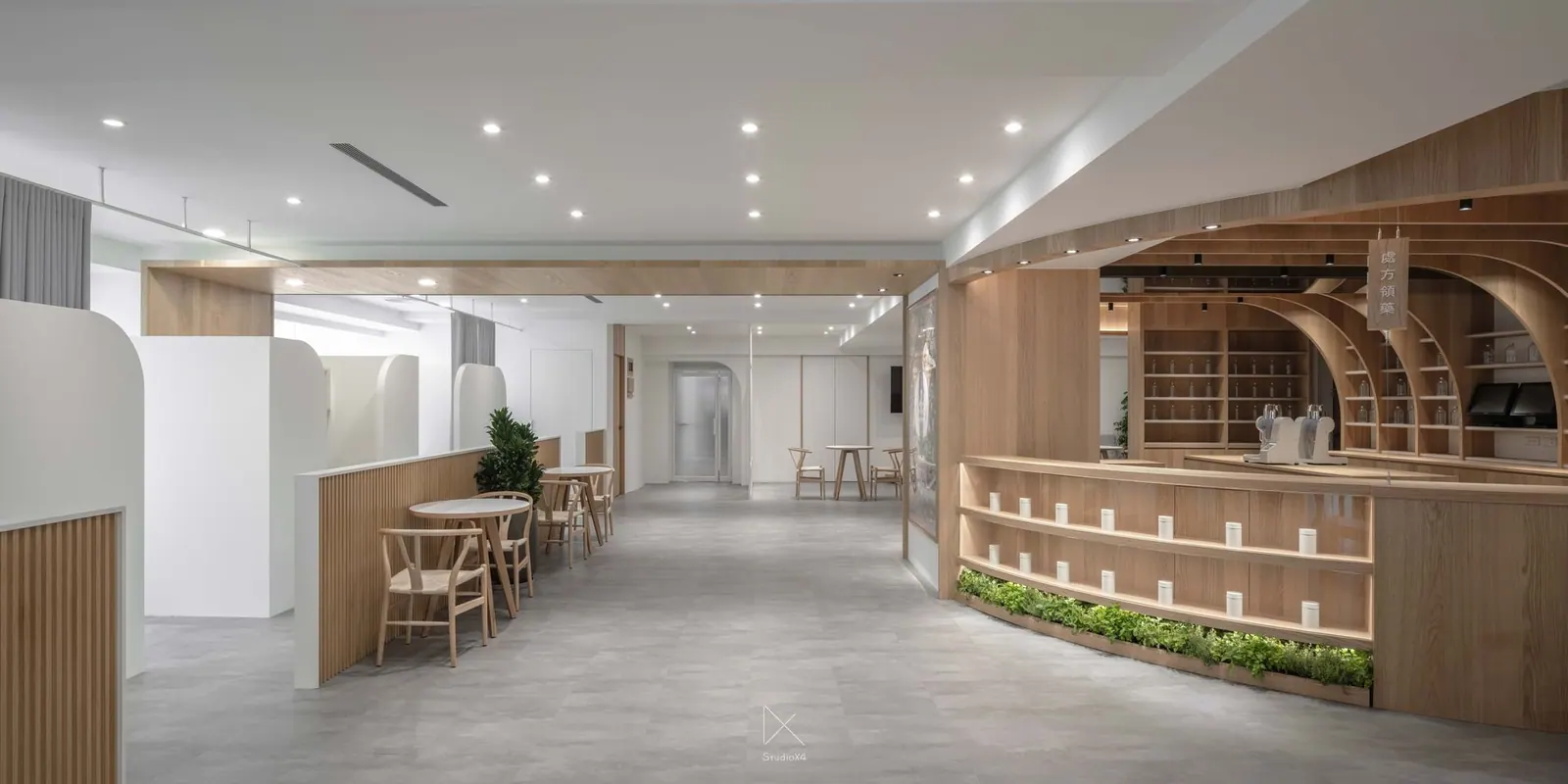
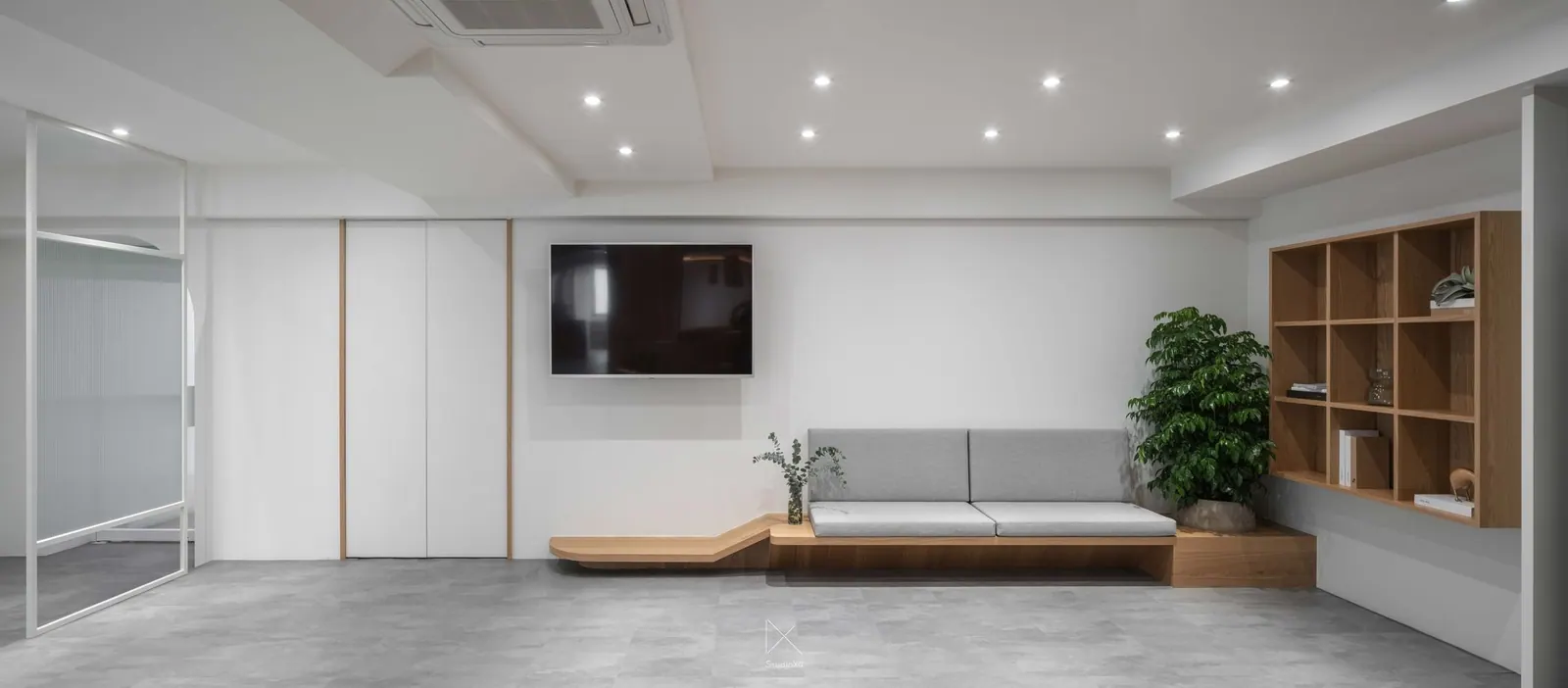
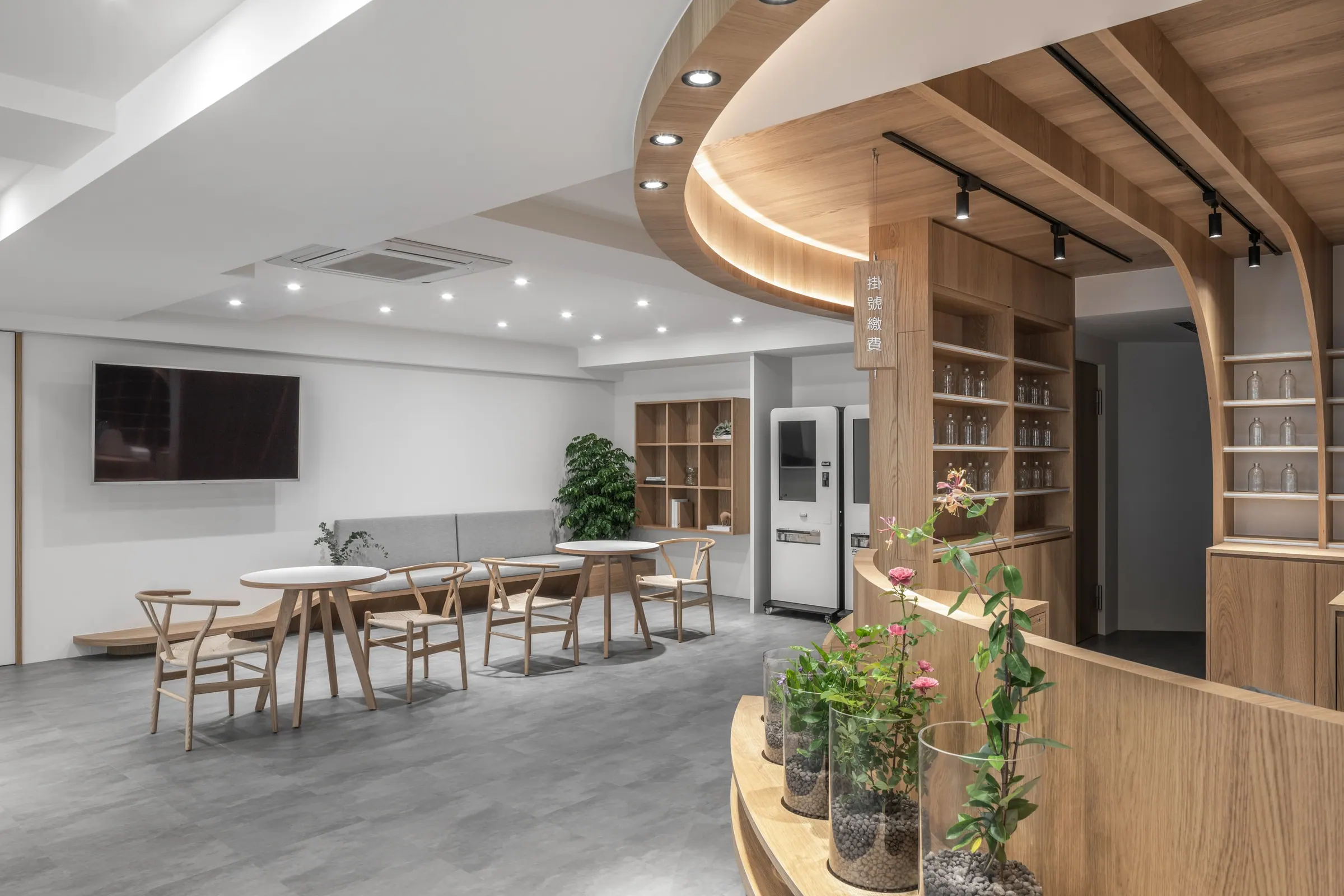
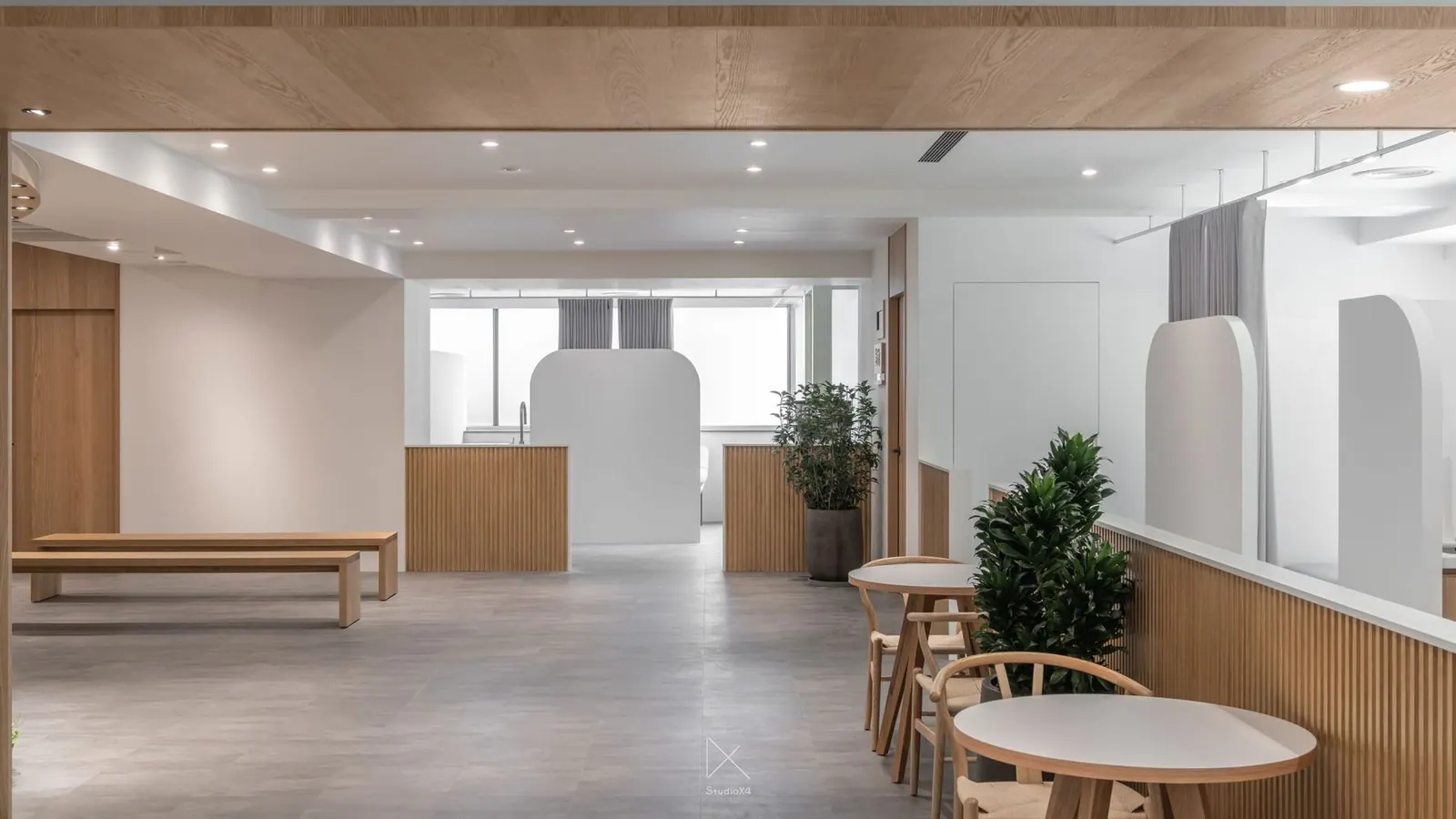
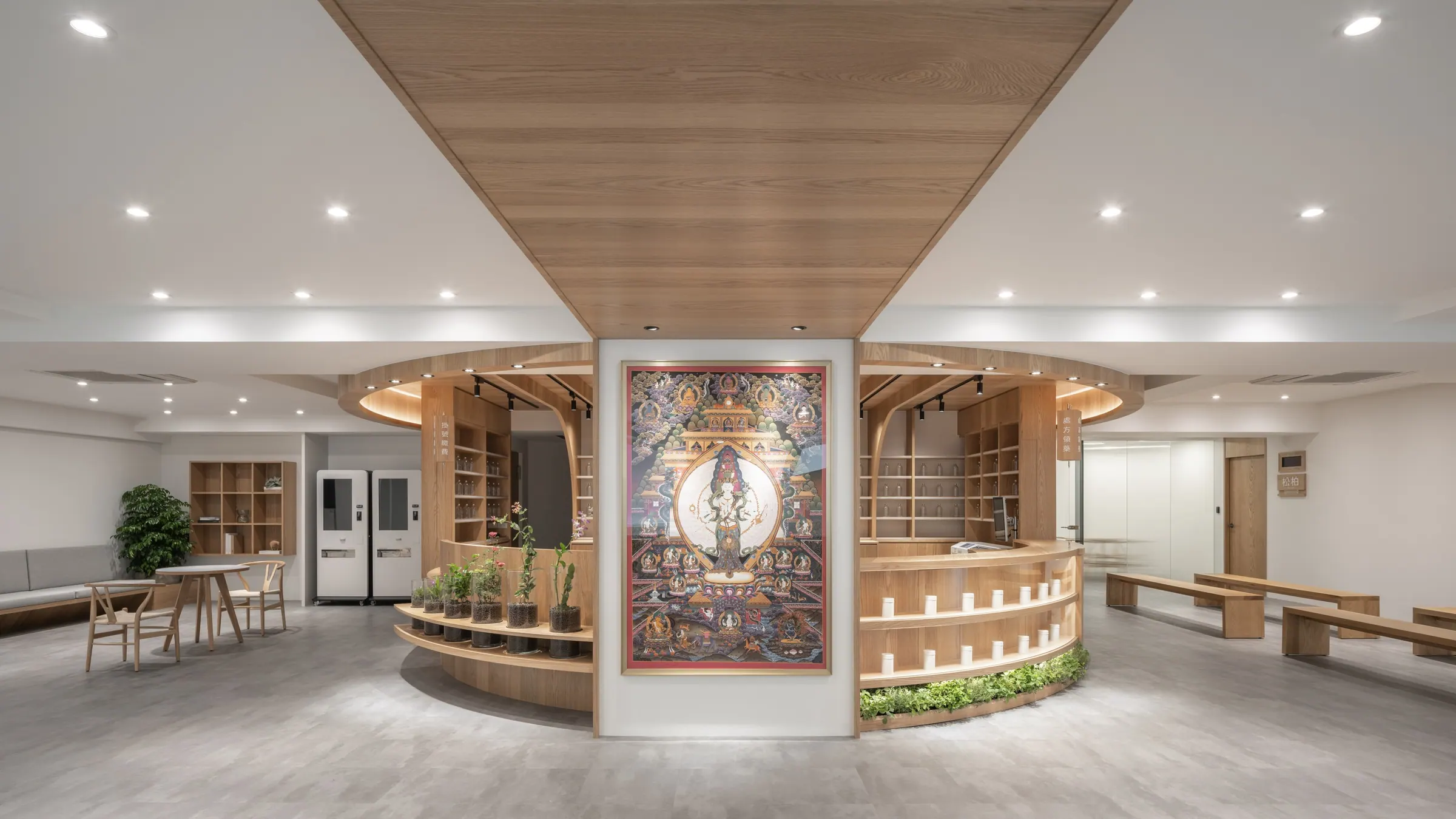
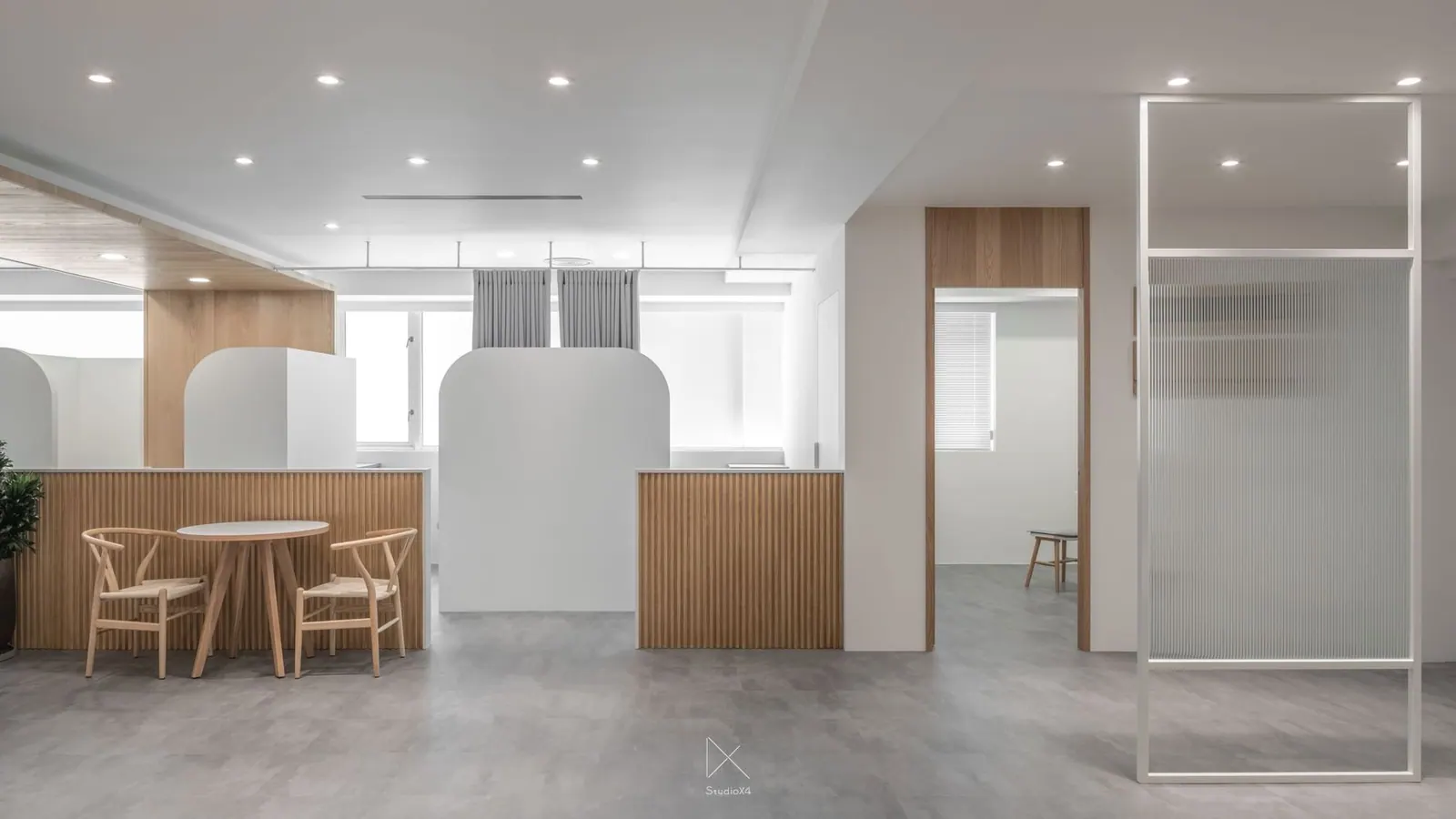
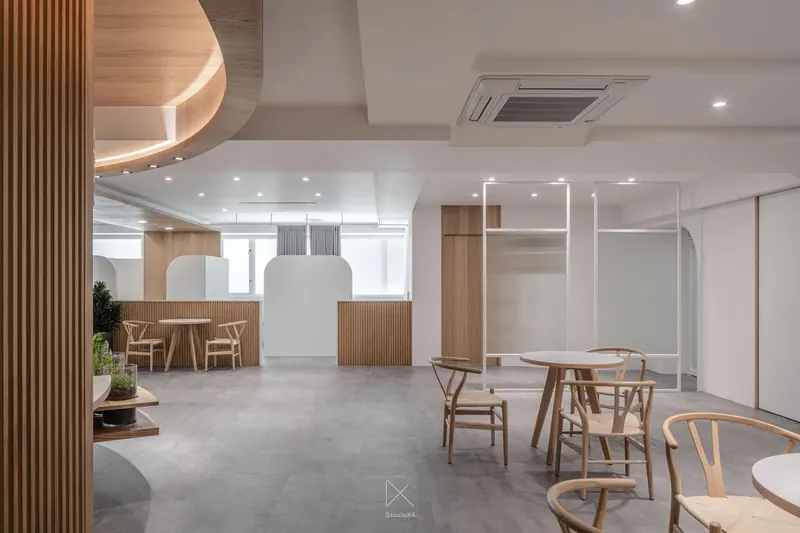
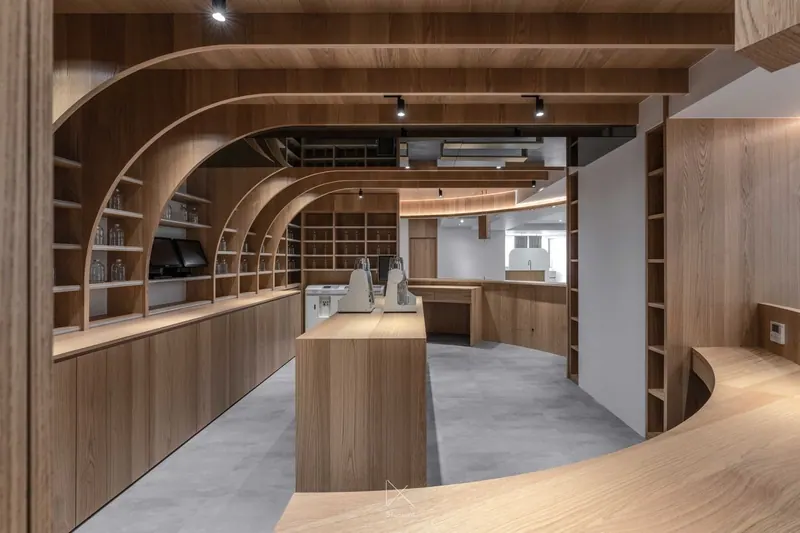
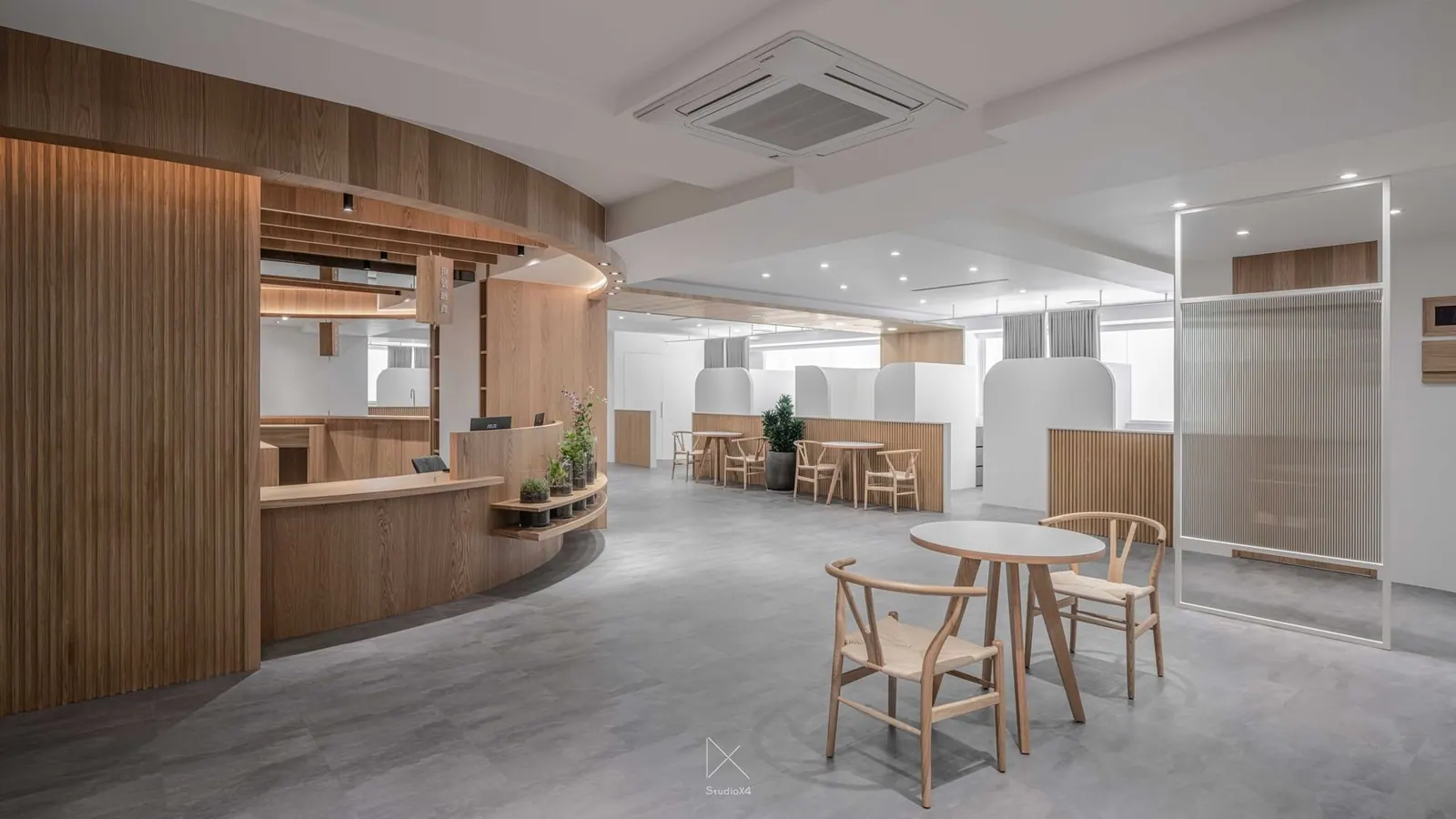
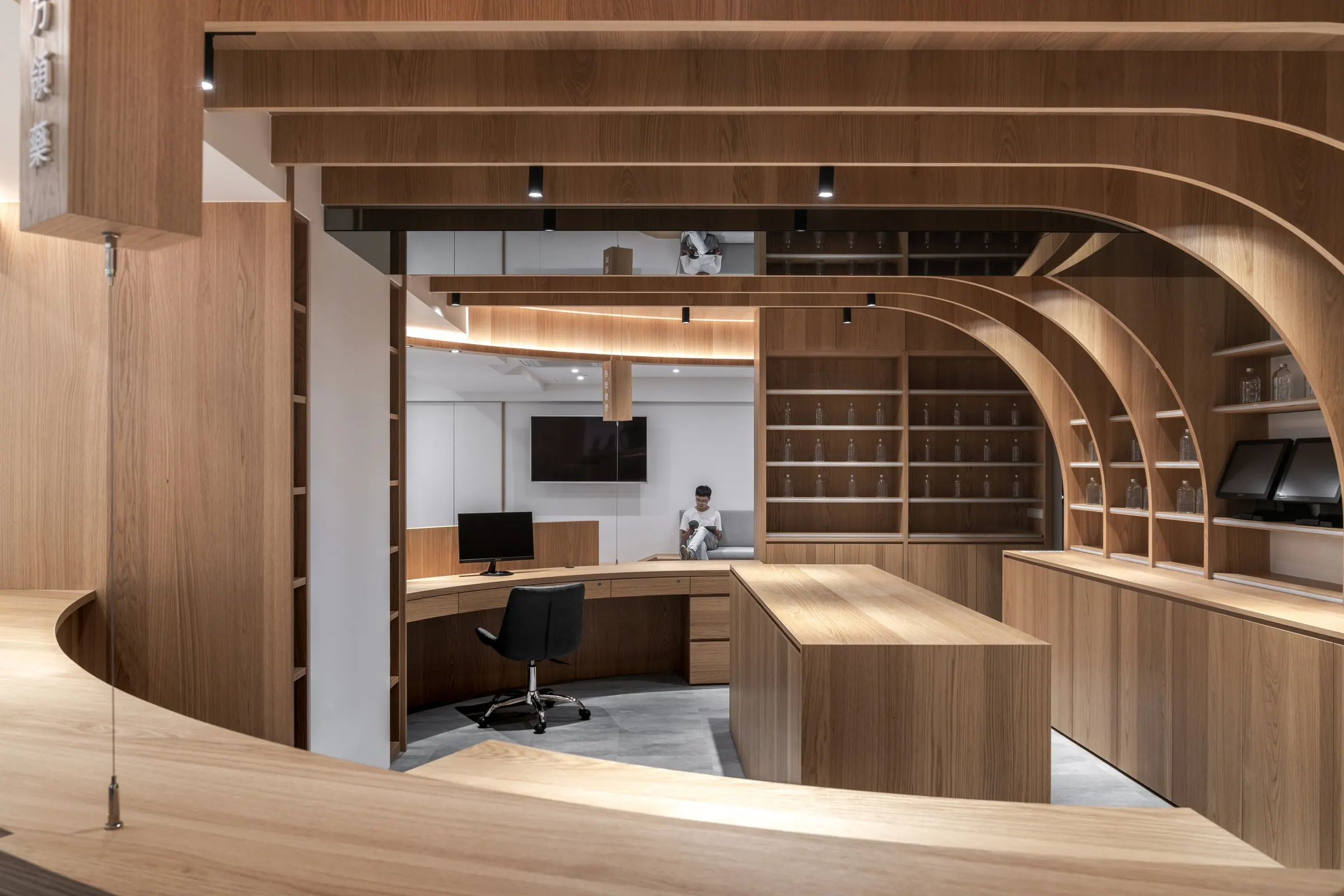
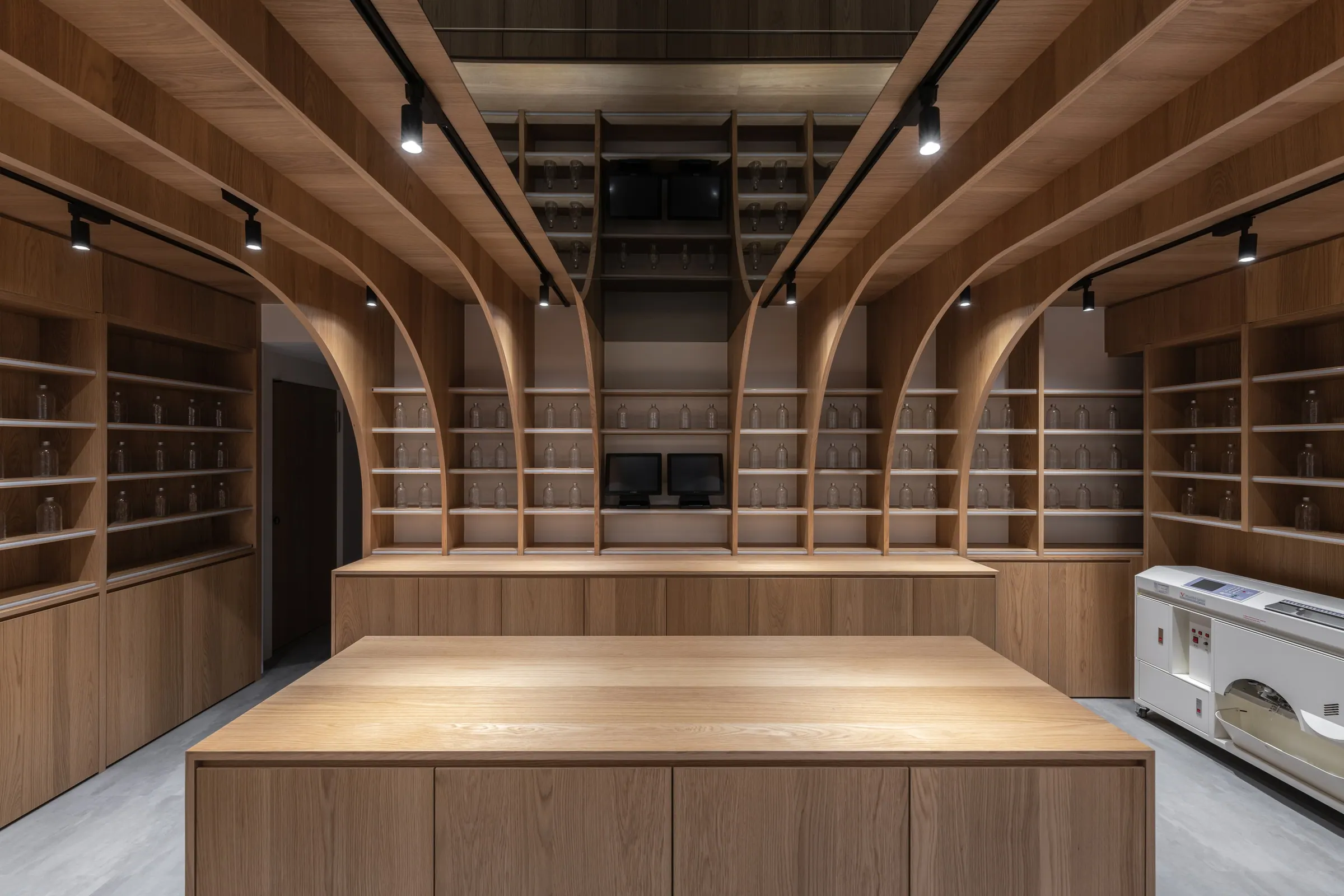
去中心化而形成之中心化 「醫療院所因診間規劃而造成之動線過長」之問題,是本案最初面臨的挑戰。抑是目前包含台大、林口長庚以及之平面規劃所碰到的共同問題,動線過長不利於年長者行走,以及易造成管理死角。因此使用衛星型平面配置,將整區整療空間去動線化,並將接待區、調劑處所以及等待區重新整併,形成中心化之圓。
"Centralization through decentralization" — the problem of "circulation paths running too long because of exam-room planning" is the first challenge this project faces. It is also a problem shared by clinic layouts today, including National Taiwan University Hospital and Linkou Chang Gung Memorial Hospital — long circulation paths are hard on elderly patients and create blind spots for staff management. The plan uses a satellite layout, removing circulation from the treatment zone and consolidating reception, dispensary, and waiting areas into a centralized circle.
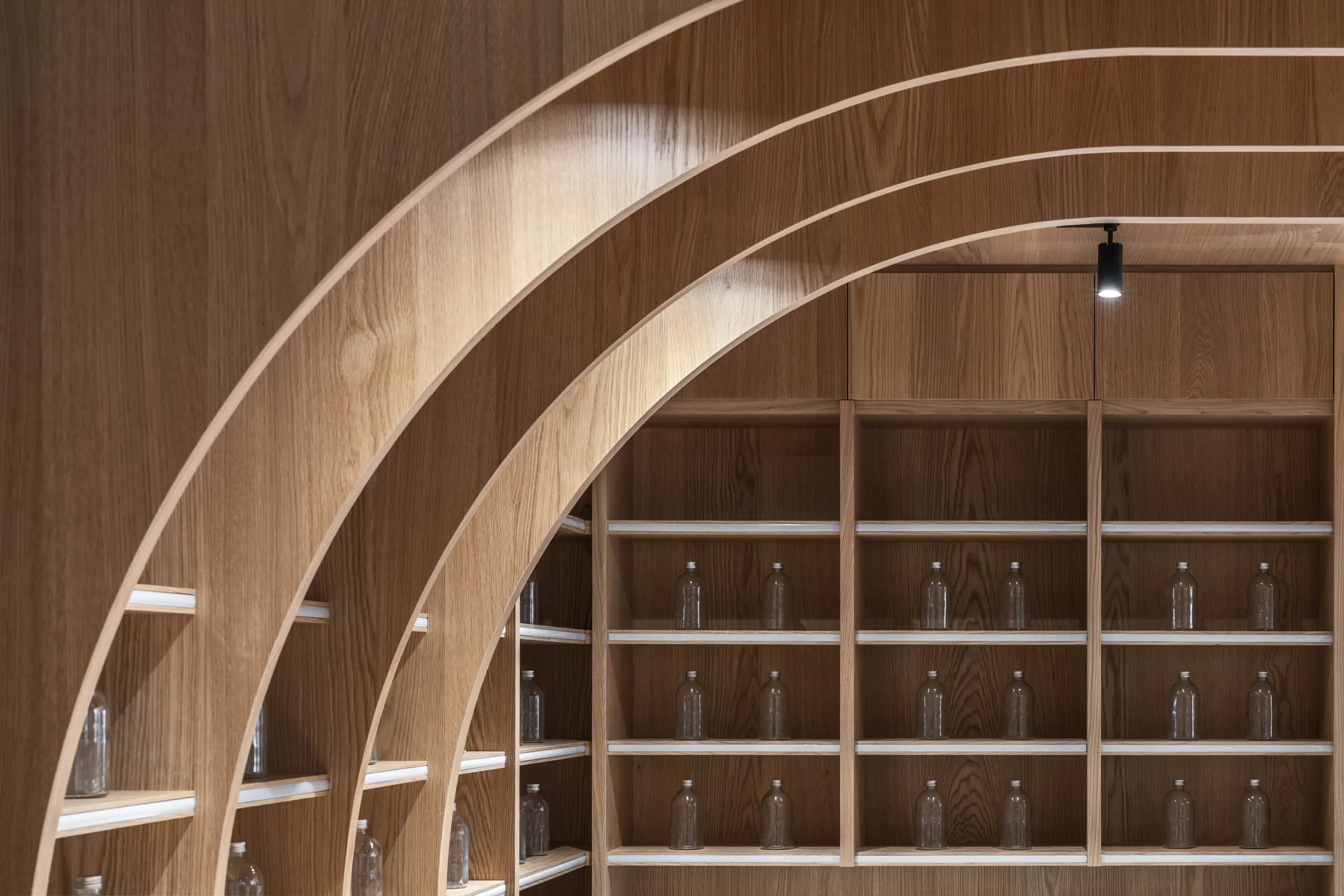
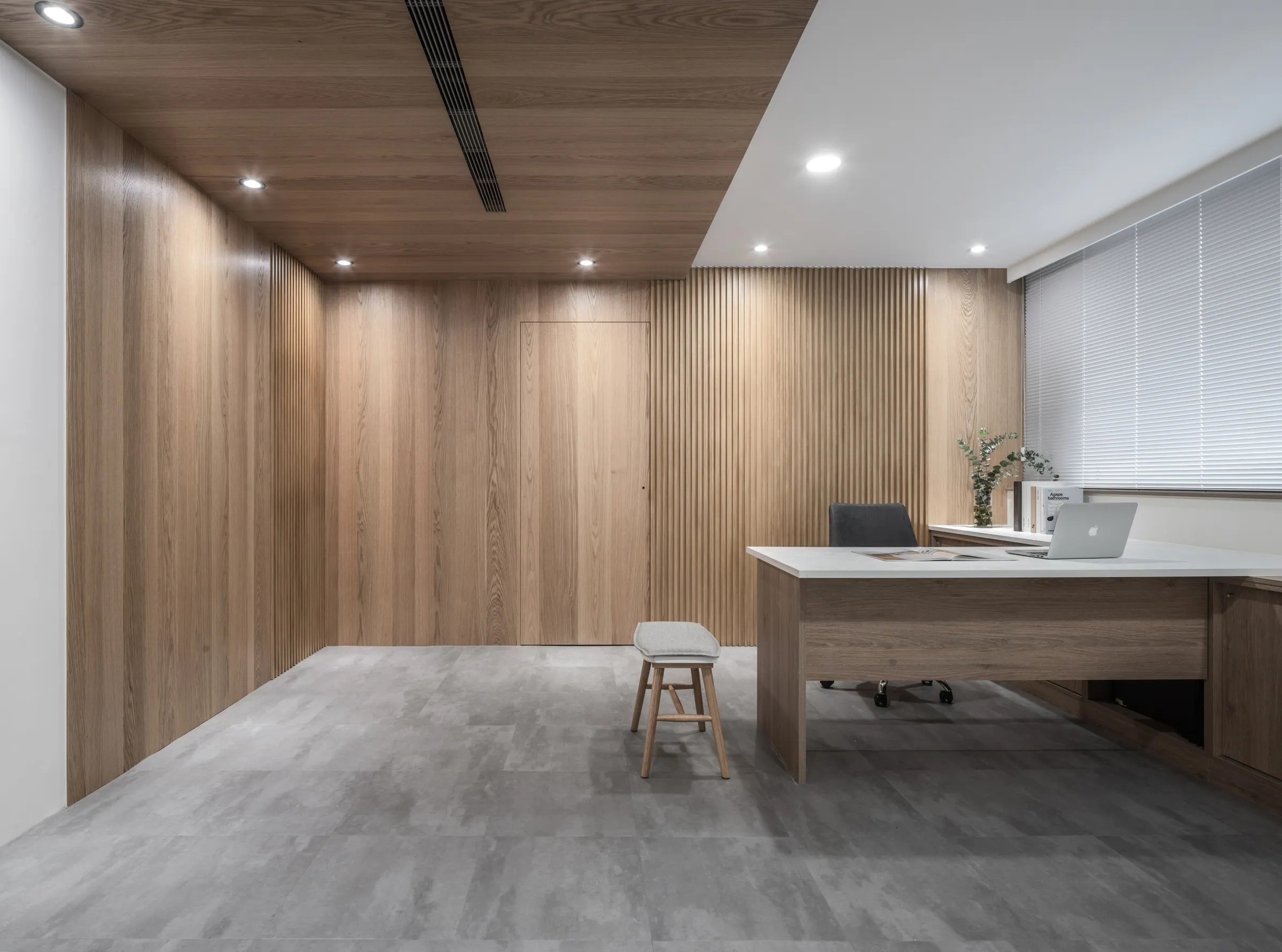
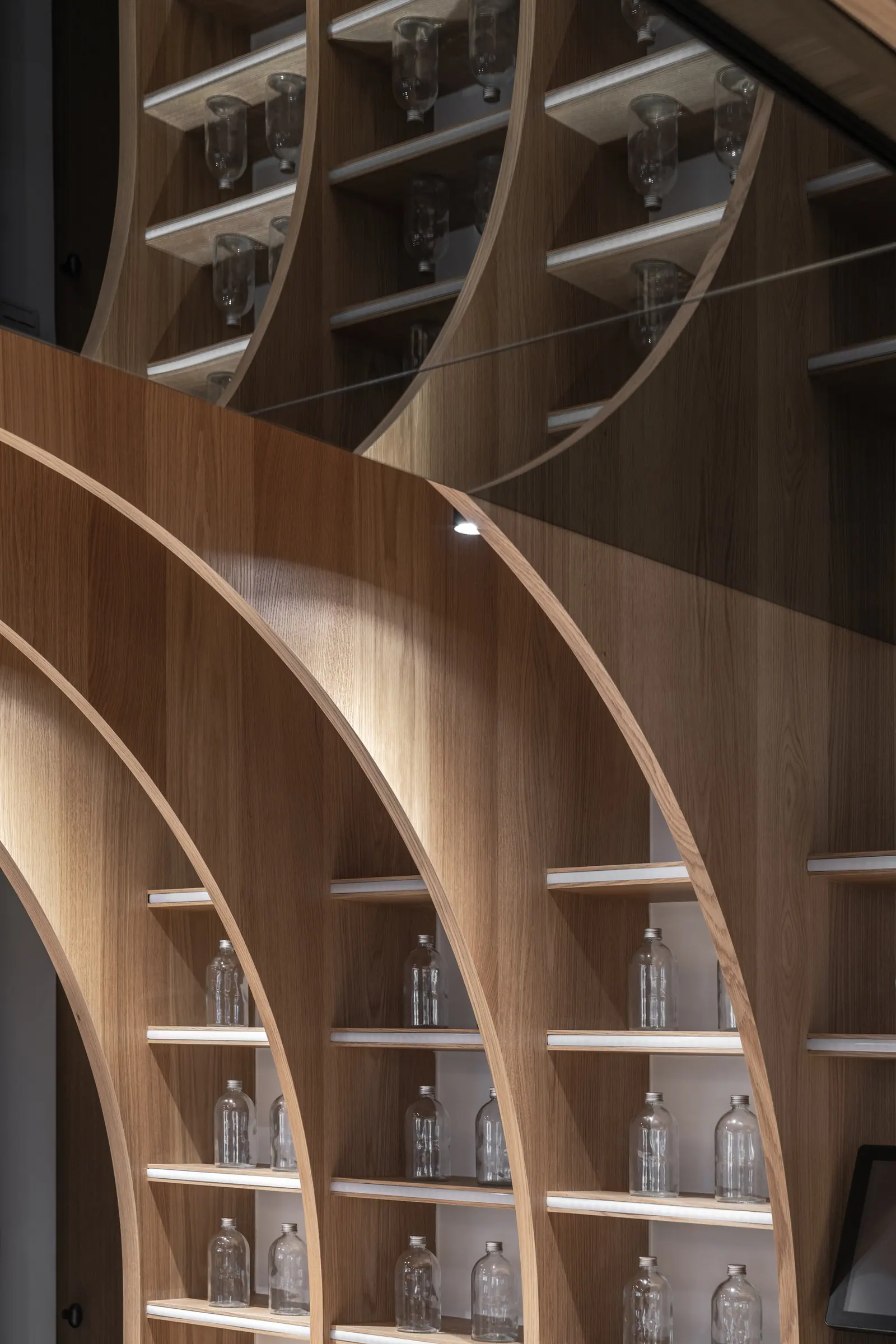
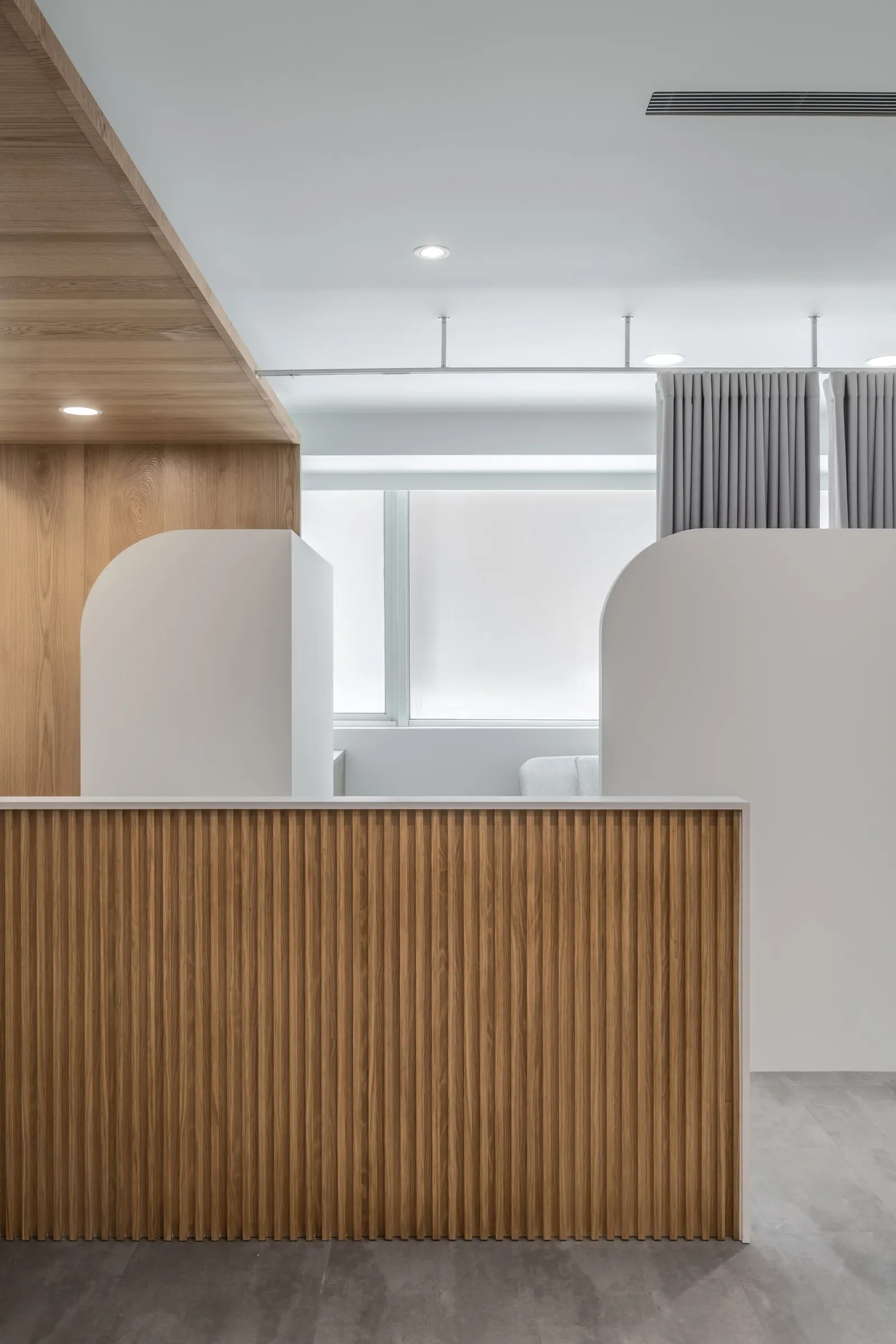
中心圓有如種子一般,存在之後,其餘機能自然為繞而生。並佐以略為圓潤之風格,減低看診時之心理壓力與一般醫療院所之生冷感;材質使用純白與橡木混合而成的觸感,並去除掉多餘的顏色,留下平靜。主要壁面有三種不同高層,以利光線穿梭,用以化解診間採光不足之問題。
The center circle works like a seed — once it exists, the remaining functions grow around it naturally. A slightly rounded style lowers the psychological pressure of a clinic visit and the cold, clinical feel typical of medical facilities. Materials mix white with the texture of oak, stripping away excess color to leave calm. The main walls step across three different heights, letting light pass through and resolving the exam rooms' lack of daylight.
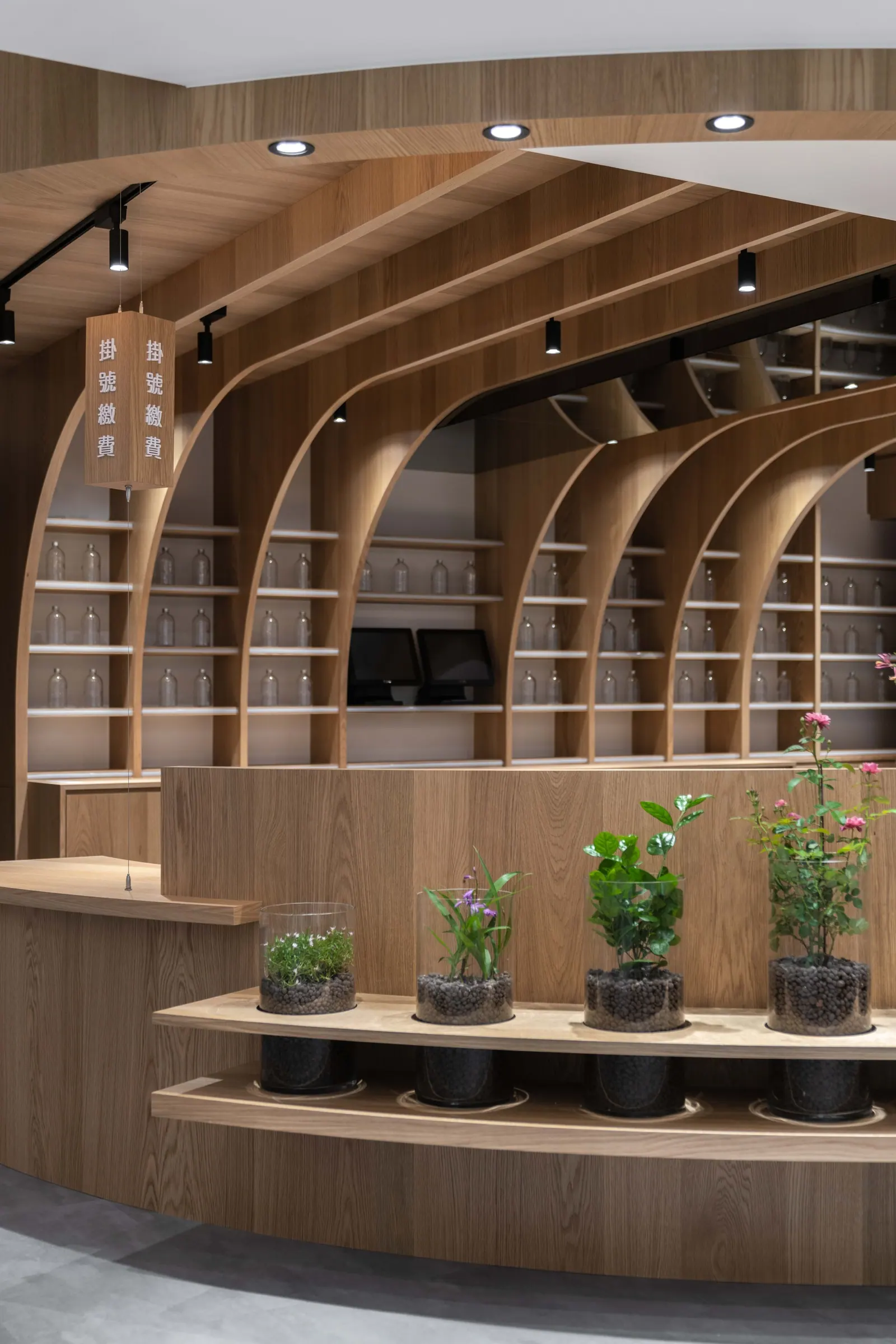
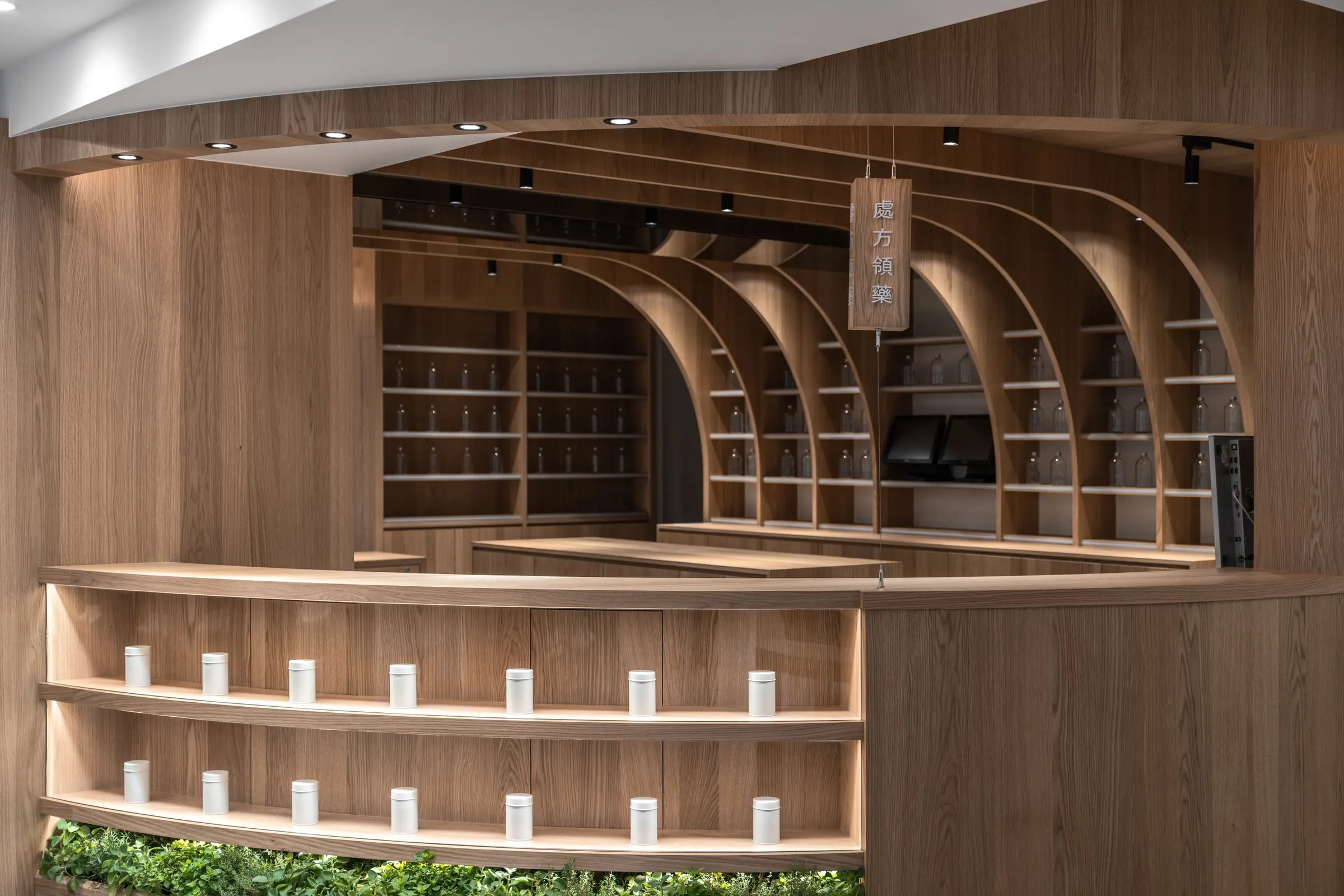
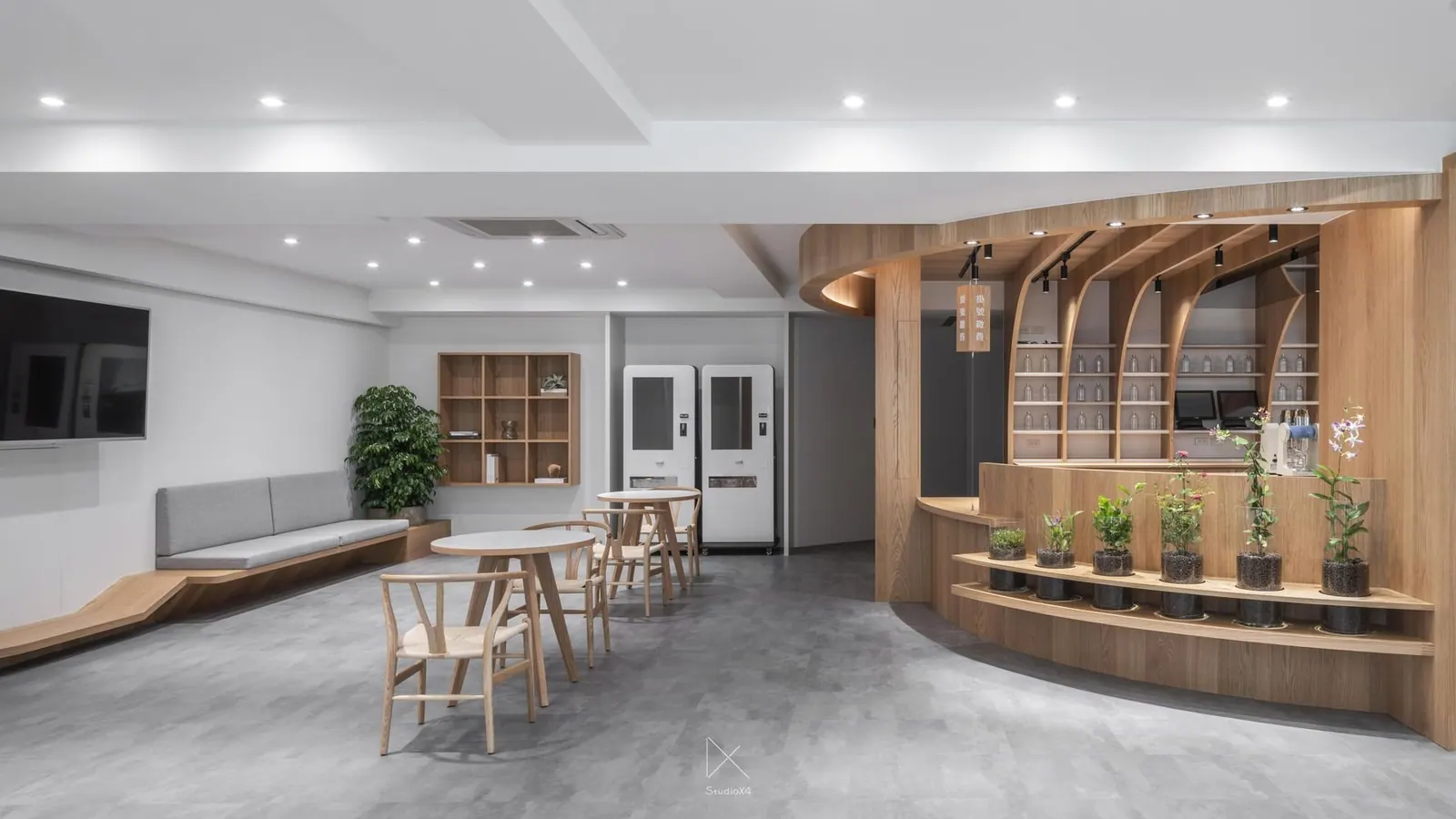
其中值得一提之處,掛號處有六支巨型試管,其中植物為當季之中藥,並依季節更換,許少人能看到中藥在成藥前的另一種樣態,植物入藥,需死亡後方能入藥,而看著它生時之姿,那些微的矛盾感不正如人生之生與死,而那生與死又是醫療院所每天必須面對之事務,有如迴圈。
Worth noting: the registration desk holds six giant test tubes, each planted with a seasonal Chinese medicinal herb, rotated by season. Few people ever see Chinese medicine in its form before it becomes medicine — a plant only enters use as medicine after it dies, yet here it stands alive. That faint contradiction mirrors life and death — and life and death are what a clinic faces every day, like a loop.
陳舜鼎醫師
Dr. Chen Shun-Ting
陳舜鼎博士為放射腫瘤科的主治醫師,同時也是慈濟之中醫主治醫師,在多年行醫之後,結合西醫與中醫之長,專長藥理分析,前為北部極具聲望之中醫師。
Dr. Chen Shun-Ting is an attending physician in radiation oncology and also an attending physician of Chinese medicine at Tzu Chi. After years of practicing medicine, he combines the strengths of Western and Chinese medicine, specializing in pharmacological analysis. He was previously a highly regarded Chinese medicine practitioner in northern Taiwan.